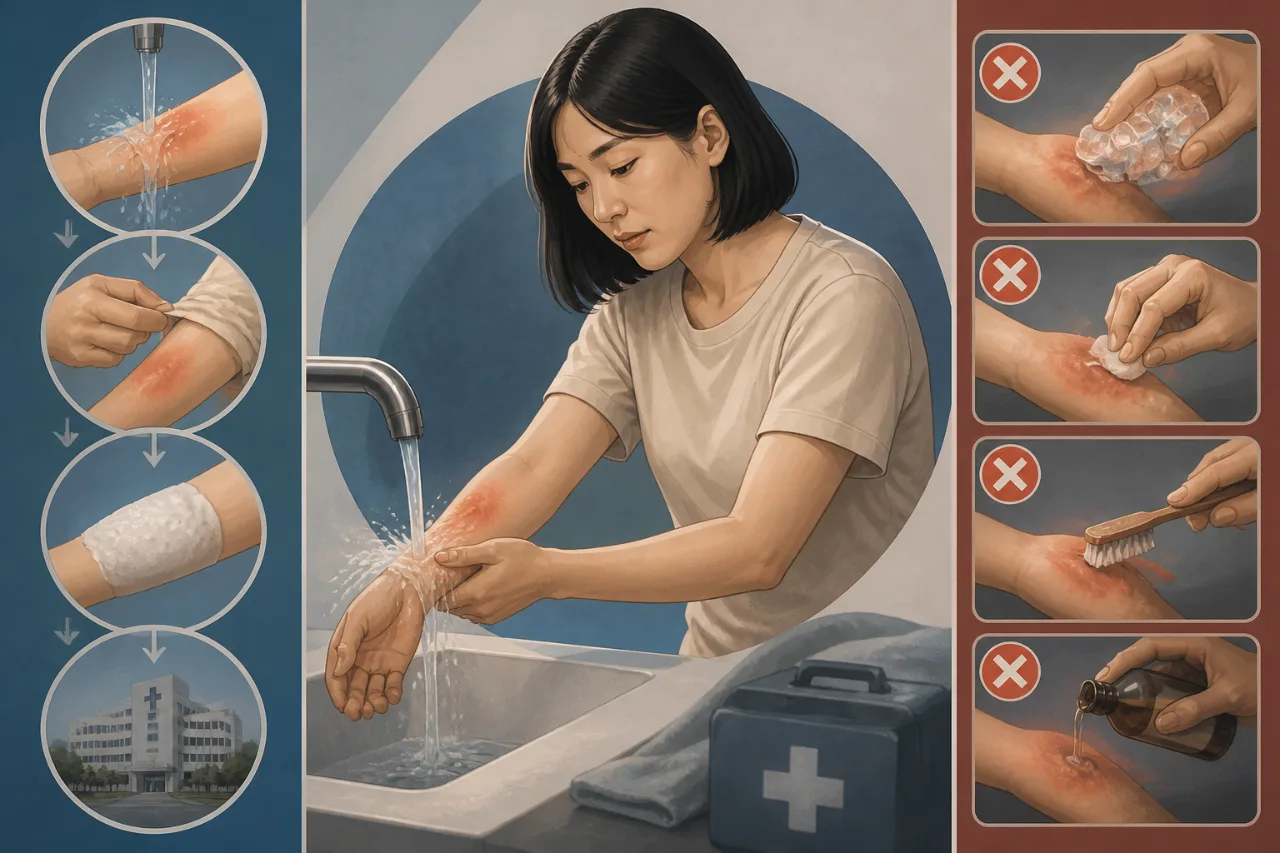
The International Federation of Red Cross and Red Crescent Societies (IFRC) says superficial cuts and grazes should be rinsed with clean tap water and covered after cleaning in its 2025 guidelines. That sequence applies to a surface injury; heavy bleeding, embedded debris, bites and deep wounds need a different level of care.
A dry scab is not the treatment goal in the IFRC sequence: the wound is cleaned and then covered instead of being deliberately left exposed to air. The guideline says covering may support healing and reduce wound size or redness. Its evidence review rates the supporting data as low certainty, so this is a practical first-aid recommendation rather than a guarantee of faster healing.
Heavy bleeding, deep wounds and infection signs need medical care
Call the local emergency medical service if bleeding will not stop with firm pressure or spurts and is hard to control. England's National Health Service (NHS) also directs people to emergency care for a very large or deep wound, loss of feeling or movement near the injury, a serious facial or palm wound, or an object embedded in the wound. Do not pull out an embedded object; apply pressure on either side while waiting for professional help.
Prompt medical assessment is also needed when soil, pus or body fluids remain after rinsing, when the injury came from a human or a wild or stray animal bite, or when increasing redness, swelling, pain, pus, fever or general illness develops. These are not routine home-care situations. The local service can determine whether the wound needs further cleaning, closure, vaccination or another treatment.
Infection can look different across skin tones. The IFRC describes surrounding skin that becomes red, purple or darker, warm and painful, or a fever as signs that require medical care. Worsening pain, spreading discoloration, pus or a bad smell should not be managed by repeatedly changing products at home.
The World Health Organization (WHO) says tetanus follows contamination of a cut or wound with bacterial spores found in soil, ash, feces and on surfaces including rusty tools. Rust is therefore not a stand-alone test of risk. The US Centers for Disease Control and Prevention (CDC) classifies punctures, bites and wounds containing dirt, soil, feces or saliva as dirty or major wounds and says preventive treatment depends on the wound and the person's vaccination history; a local clinician or vaccination service should apply the schedule used in that country.
Rinse the abrasion before choosing a dressing
Control bleeding
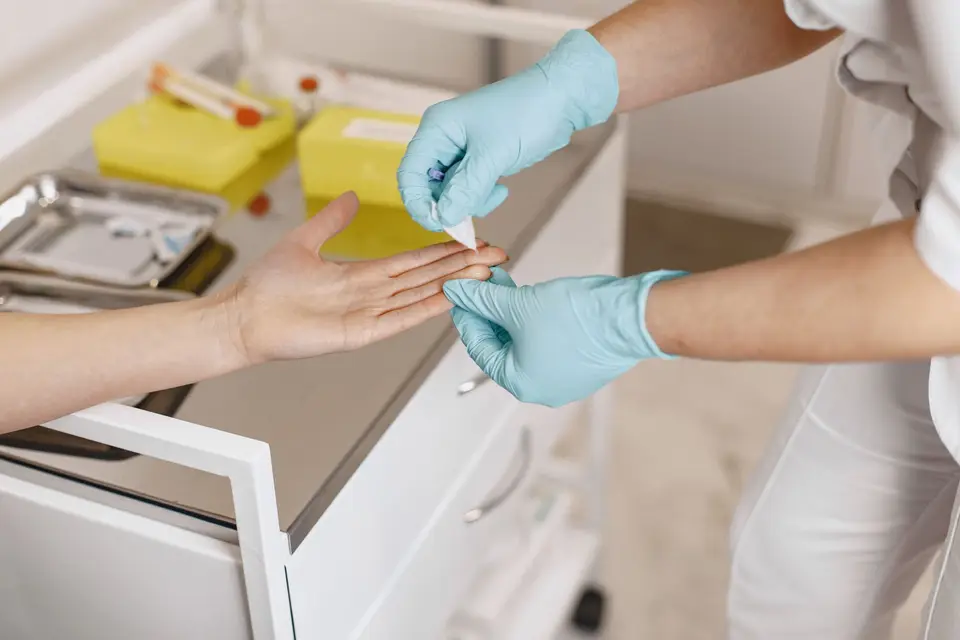
Wash and dry the hands, and use disposable gloves if they are available. Apply firm pressure with sterile gauze or a clean folded cloth. If blood soaks through, add another layer without removing the first while arranging help if bleeding continues.
Flush away grit
The IFRC recommends lukewarm water that is safe to drink, preferably from a tap so the flow can rinse the wound. Sterile saline is an alternative when clean water is unavailable. After rinsing, a clean compress can lift loose dirt, but material that remains embedded needs medical removal.
Do not reach for the strongest antiseptic
The IFRC names clean water or sterile saline as the preferred wound cleaners and says isopropyl alcohol and hydrogen peroxide may cause more harm or pain than benefit. Its guidance allows povidone iodine when clean water and saline are unavailable, so the evidence does not support a blanket claim that every antiseptic is harmful. The US CDC also says topical or systemic antibiotics should not be used solely to prevent tetanus.
Cover and inspect
Dry the skin around the abrasion, then cover the raw surface with a sterile dressing or adhesive bandage. The IFRC says tape, hydrogel, film and hydrocolloid dressings may reduce wound size or redness and support healing. The appropriate material depends on wound size, location, drainage, skin sensitivity and what is locally available.
Inspect the outside of the dressing each day. The IFRC says a clean dressing can remain in place and should be replaced when blood or clear fluid stains it; England's NHS says to keep it clean and dry and change it as often as needed. Product instructions or a clinician may set a different schedule, and any dressing that becomes wet, dirty, loose or soaked needs replacement.

Covering is supported, but the evidence has limits
A simple clean covering is the guideline's default after rinsing a superficial abrasion. The IFRC review found no studies of ointments or hydrating creams on simple skin wounds; most of the evidence it found involved chronic or surgical wounds or animal models. That gap does not support presenting one topical product as necessary for every scrape.
The IFRC evidence review found five small experimental studies favoring covered wounds over exposure to air for some measures of wound size, redness and new skin growth, but rated the evidence as low certainty. The review did not establish one dressing as best or show the same advantage at every measured time point. A scab's presence or thickness is therefore a poor substitute for checking whether pain, color, warmth and drainage are improving.
Children, pregnancy and health conditions change the care threshold
Children
The same clean-and-cover sequence applies to a child's superficial abrasion, with an adult controlling pressure and checking for trapped debris. The IFRC notes that children may show a strong pain response after a minor wound, but distress should not be used to dismiss persistent pain or loss of movement. A deep wound, bite, embedded object, uncontrolled bleeding or uncertain tetanus protection needs a clinician.
Pregnancy
APPI News could not find a dedicated international guideline that changes the cleaning and covering sequence for a minor abrasion during pregnancy at the time of writing. England's NHS advises checking with a pharmacist, midwife or doctor before taking any medicine during pregnancy, including a nonprescription painkiller. Prescribed medicines should not be stopped without advice from the treating clinician.
Diabetes and reduced sensation
The US CDC says diabetes-related nerve damage can make a cut or sore on the foot hard to notice, while poor blood flow can make a wound more likely to become infected and harder to heal. A foot abrasion needs prompt clinical review when feeling is reduced or when a sore, color change, warmth, swelling or infection sign appears. Pain alone is not a safe measure of severity when sensation is impaired.
Immune suppression and regular medicines
The US CDC says severe immunodeficiency changes the assessment for tetanus immune globulin after a dirty or major wound. That is a clinical decision tied to wound type, immune status, vaccination history and national guidance. People with immune suppression should contact a local clinician instead of applying a general booster timetable.
England's NHS says anticoagulants increase the time blood takes to clot and that bleeding which cannot be stopped requires immediate medical attention. A current medicine list should go with the person to care. Any decision to pause or change an anticoagulant belongs to the prescribing clinician.

Frequently asked questions
Should an abrasion be left open so it forms a scab?
No. Current IFRC guidance favors cleaning and covering a superficial abrasion rather than deliberately exposing it to air, although the evidence supporting covering is low certainty.
Is tap water acceptable, or is sterile saline required?
Use tap water only when it is safe to drink; its flow helps remove grit. Sterile saline is an alternative, and the IFRC review did not find reliable evidence that saline lowers infection more than tap water.
Should hydrogen peroxide or rubbing alcohol be used?
The IFRC says clean water or sterile saline is preferred and identifies hydrogen peroxide and isopropyl alcohol as products that may cause more harm or pain than benefit. Povidone iodine is an option in its guidance when clean water and saline are unavailable.
Does a dressing have to be changed every day?
There is no single schedule across the cited guidance. Inspect it daily, replace it when wet, dirty, loose or stained, and follow the dressing instructions or a clinician's plan.
Does a scrape from rusty metal always require a tetanus booster?
Rust alone does not decide the risk. A local clinician should assess contamination, wound type and vaccination history under the country's current immunization schedule.
Sources and further reading
- International first aid, resuscitation and education guidelines 2025(International Federation of Red Cross and Red Crescent Societies)
- Cuts and grazes(National Health Service in England)
- Tetanus(World Health Organization)
- Clinical Guidance for Wound Management to Prevent Tetanus(US Centers for Disease Control and Prevention)
- Medicines in pregnancy(National Health Service in England)
- Your Feet and Diabetes(US Centers for Disease Control and Prevention)
- Side effects - Anticoagulant medicines(National Health Service in England)