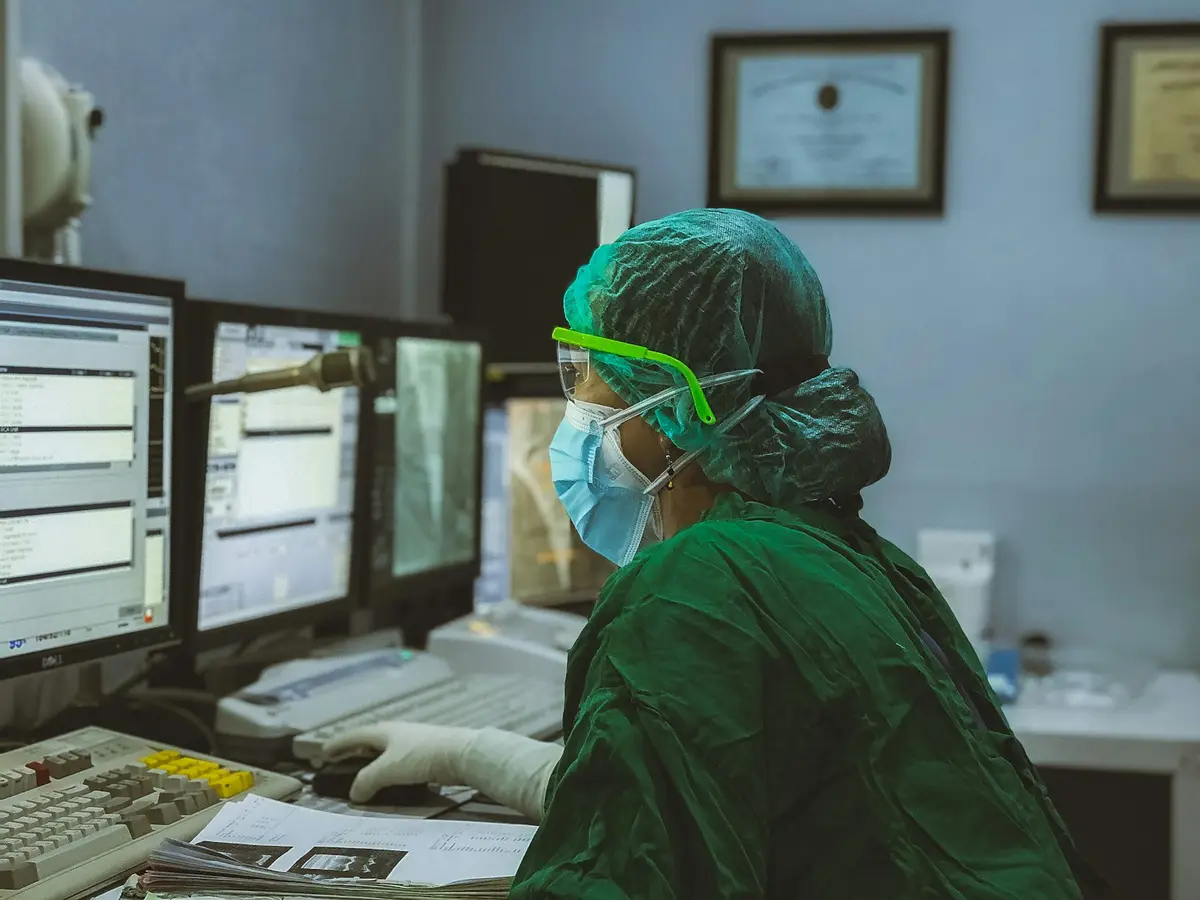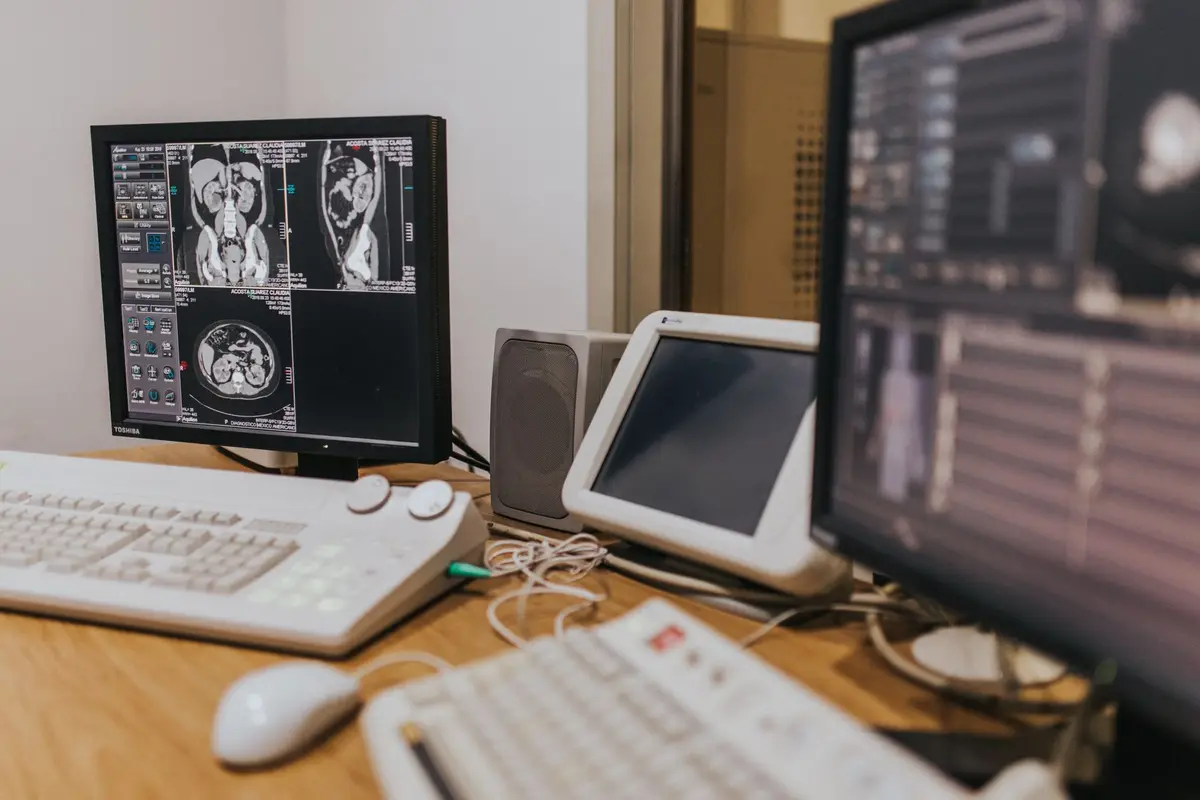
Researchers reported in The Lancet on January 31, 2026 that the final analysis of Sweden's Mammography Screening with Artificial Intelligence (MASAI) trial included 105,915 participants and found a workflow supported by artificial intelligence (AI) noninferior to standard double reading for interval cancer. The intervention used an AI score to route examinations to one or two radiologists and supplied detection marks, so the trial tested assisted reading rather than autonomous diagnosis.
Interval cancers are primary breast cancers diagnosed between screening rounds, or within two years after the last scheduled screen, after not being detected at screening. The rate was 1.55 per 1,000 participants in the AI group and 1.76 per 1,000 in the control group after 53,043 and 52,872 participants, respectively, were included in the analysis.
The 12 percent figure does not prove a reduction
The interval-cancer rate ratio was 0.88, producing a point estimate 12 percent below the control result. Its 95 percent confidence interval ran from 0.65 to 1.18, which included no difference and outcomes favoring the control group. The upper bound remained below the prespecified noninferiority margin of 1.20, so the result met that test without establishing that AI reduced interval cancers.
Screening sensitivity was 80.5 percent in the AI group and 73.8 percent in the control group, while specificity was 98.5 percent in both. The AI group had 75 invasive interval cancers compared with 89 in the control group, 38 tumors classified as T2 or larger compared with 48, and 43 non-luminal A cancers compared with 59. The paper presented those subtype counts descriptively, so they should not be treated as separately confirmed percentage reductions.
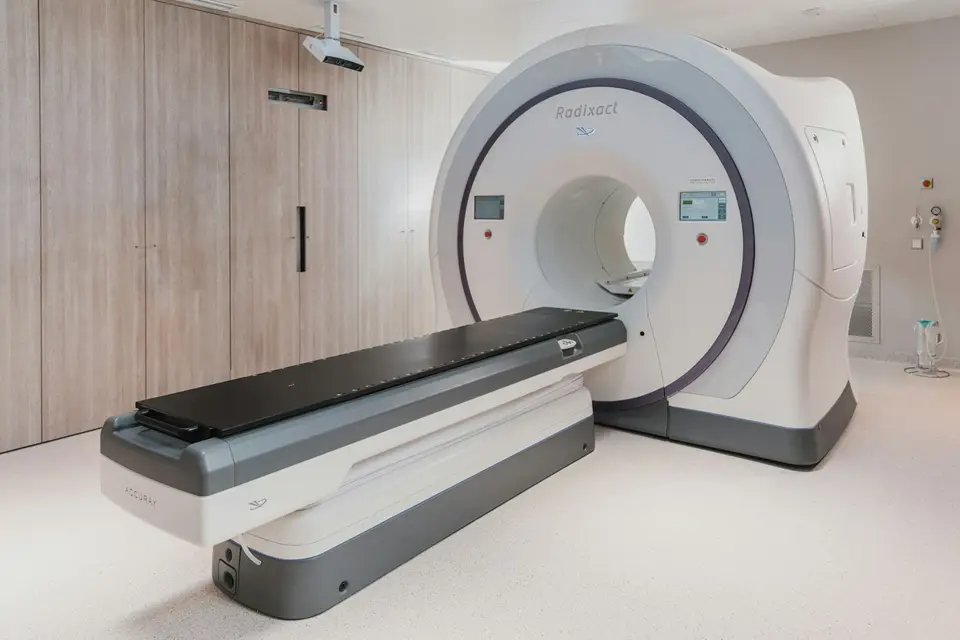
The workflow kept radiologists in the loop
Transpara version 1.7.0 assigned each examination a risk score on a 10-level scale; scores one through nine went to one radiologist, while score 10 went to two radiologists. Readers could see the risk score for every examination and detection marks for scores eight through 10. Every examination therefore retained at least one human reader.
The 2025 full-cohort analysis recorded 338 screen-detected cancers in the AI group and 262 in the control group, equivalent to 6.4 and 5.0 per 1,000 participants. False-positive rates were similar at 1.5 percent and 1.4 percent, while the number of screen readings fell from 109,692 to 61,248, a reduction of 44.2 percent. That workload measure counts image interpretations, not total radiologist hours, staffing needs or program costs.
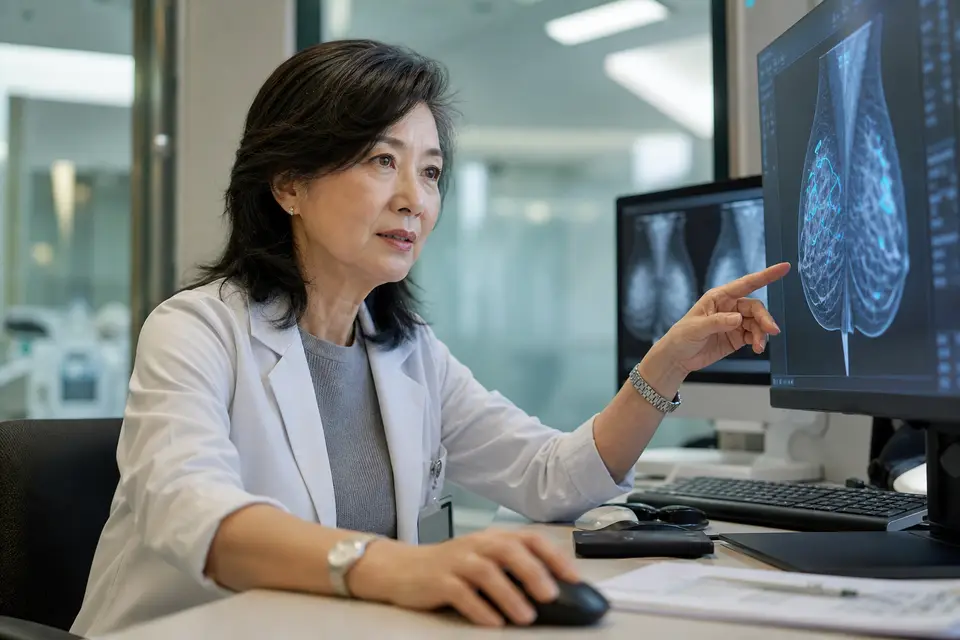
The result is specific to one screening program
MASAI enrolled women aged 40 to 80 at four screening sites in southwest Sweden. Its control was the Swedish program's standard double-reading process, while the intervention replaced the second reader for most examinations and retained two readers for the highest AI score. A program that already uses one reader does not begin with the same workload or comparison.
The trial tested one version of one commercial system, Transpara, rather than mammography AI as a single interchangeable technology. The findings cannot be assigned to another algorithm, camera setup or patient population without separate evidence. The 2023 report also said race and ethnicity data were not collected.
The published analyses measured cancer detection, interval cancers, sensitivity, specificity and reading counts. They did not establish an effect on breast-cancer mortality, total program cost or long-term overdiagnosis. Those unanswered outcomes limit what screening authorities can infer from the reported performance measures.
Taiwan licensed a different assisted-reading product
The Taiwan Food and Drug Administration is the health ministry agency responsible for regulating medical products in Taiwan. Its list of AI and machine-learning medical-device permits issued from 2020 through 2025 includes import permit 034620 for computer-assisted detection and diagnosis software used with digital mammography.
Lunit said on August 25, 2022 that the Taiwan regulator had issued a Class II license for Lunit INSIGHT MMG, which marks suspicious areas and gives radiologists an abnormality score. The company release also cited use at one hospital, but it did not provide a national adoption count. Its claim of 96 percent accuracy did not specify the study population, clinical endpoint or confidence interval on that page, so it is not comparable with the MASAI outcomes.
MASAI used Transpara rather than Lunit INSIGHT MMG. The Swedish trial therefore does not validate the product licensed in Taiwan, even though both assist radiologists reading mammograms. A medical-device authorization in one jurisdiction also does not establish reimbursement or routine use in a national screening program.

Taiwan adoption remains unverified
APPI News could not find a published national count of Taiwan hospitals using AI for mammography screening at the time of writing. It also could not verify an official rule requiring AI reading, or a national payment arrangement for it, within Taiwan's publicly funded mammography program.
That verification gap does not show that no hospital uses the software or that no local payment arrangement exists. It means the public records reviewed for this report establish a device permit and one company-reported deployment, but not nationwide implementation.
Sources and further reading
- Interval cancer, sensitivity, and specificity in the MASAI study(The Lancet via PubMed)
- Screening performance and characteristics of breast cancer detected in the MASAI trial(The Lancet Digital Health via PubMed)
- Clinical safety analysis of AI-supported screen reading in the MASAI trial(The Lancet Oncology via PubMed)
- AI and machine-learning medical-device permits approved in Taiwan, 2020-2025(Taiwan Food and Drug Administration)
- Lunit AI solution for breast cancer detection wins commercial approval in Taiwan(Lunit)