
A Taipei pharmacists' group and a private health association are expanding a program that links community pharmacies with clinics and corporate sponsors. The initiative proposes foot, bone and eye risk checks, but its promoters have not published test accuracy, referral completion or health-outcome data.
The Taipei Pharmacists Association and a Taiwan-based private health advocacy group began organizing the community health alliance in 2025, and two private clinic groups signed a cooperation agreement in July 2026. Taiwan's National Health Insurance Administration, which runs the country's single-payer health insurance system, and the pharmacists' association witnessed the signing but were not described as operators of the proposed tests.
The agreement adds clinics to a pharmacy-based network
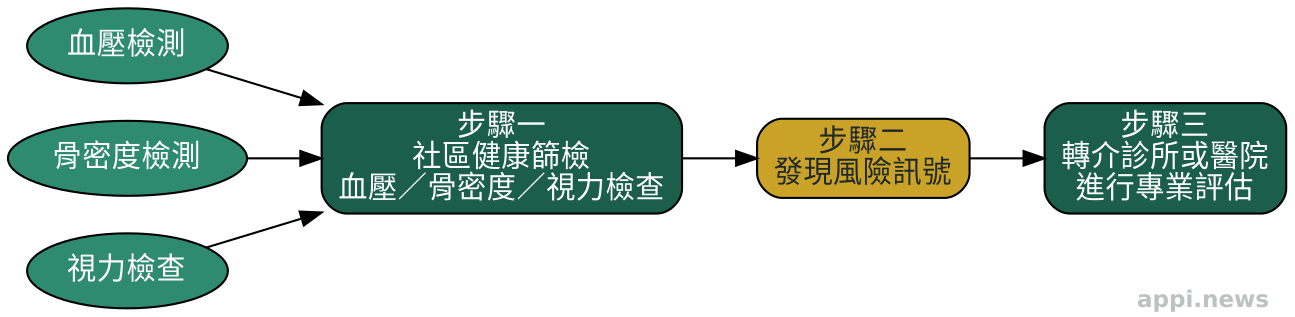
The alliance brings together pharmacies, clinics, companies and local civic groups. Pharmacies are intended to serve as the public contact point, while clinics would provide further assessment or referral services. Corporate and civic participants would provide venues or other resources for community events.
The published account says planned activities from August through December 2026 include foot, bone and general health-risk checks. The clinic agreement also proposes vision, eye-pressure, retinal imaging, optical coherence tomography and visual-field examinations, along with genetic risk testing and referrals to eye clinics. Some of the eye services would be paid by participants rather than covered as a public screening program.
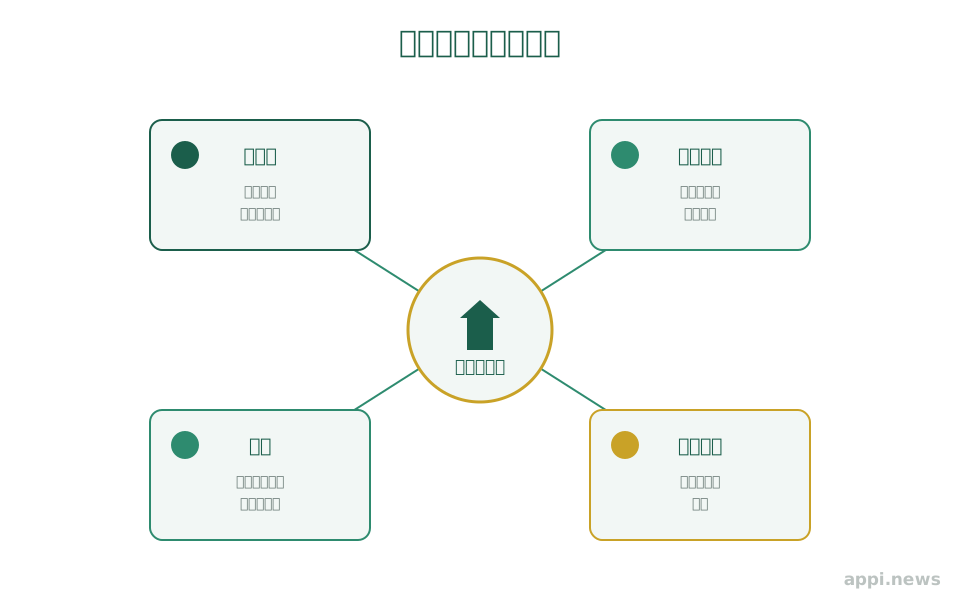
The reports do not specify which pharmacy sites will offer each test, who qualifies, what counts as an abnormal result or which referral protocol will apply. They also do not say whether genetic counseling is part of the proposed genetic testing. Those omissions make it impossible to assess the program as a defined clinical pathway.
Access does not establish that a screening program works
Community pharmacies can make some health services easier to reach because people can enter without a hospital appointment. The World Health Organization Regional Office for Europe lists health screening, vaccination, health education and guidance on diagnostic tests among the public-health roles pharmacists may perform.
That broad role does not validate every test offered through a pharmacy. Screening asks whether testing apparently healthy people leads to better outcomes overall, not merely whether a device can produce a measurement. The answer depends on the target population, test performance, follow-up care and the balance between benefit and harm.
WHO screening guidance says programs should have a clear evidence base, quality assurance, an operational care pathway, sufficient health-system capacity and ongoing monitoring. It also warns that screening can create false-positive and false-negative results, unnecessary investigation, anxiety and costs.
Evidence from other pharmacy services cannot fill the gaps
Research on community pharmacy programs varies by service and setting. A systematic review identified 40 studies of pharmacy interventions for diabetes, cardiovascular disease and related risk factors, but found that study quality was generally poor and no single intervention emerged as superior. The review covered interventions such as blood-pressure, lipid and diabetes management; it did not evaluate the bundle of foot, bone, eye and genetic checks proposed in Taipei.
The distinction prevents evidence from one service from being used to endorse another. A pharmacy may be a practical site for a validated blood-pressure service, for example, without that finding establishing the clinical value of an unrelated body-composition or genetic risk check.
Outcome data will determine whether the model adds value
The organizers use the term sub-health for a state between health and diagnosed disease. The term is an advocacy label in this program, not a diagnosis or a defined population measure. The reports provide no epidemiological estimate for how many people meet such a description.
A useful evaluation would state how many people were invited and tested, the proportion referred, whether referrals were completed, what diagnoses followed and whether outcomes differed from usual care. It would also record false alarms, missed cases, costs, data-sharing rules and any commercial pathway from a free event to paid testing.
APPI News could not find a published protocol or results covering those measures at the time of writing. Until such data are available, the alliance shows that pharmacies, clinics and sponsors can organize a more accessible testing venue; it does not establish that the announced package prevents disease or improves health outcomes.
Sources and further reading
- Taipei pharmacists, clinics and companies form community health alliance(Health 2.0 / TVBS)
- Screening programmes: a short guide(World Health Organization Regional Office for Europe)
- World Pharmacists Day 2024: Pharmacists meeting global health needs(World Health Organization Regional Office for Europe)
- Diabetes and cardiovascular disease interventions by community pharmacists: a systematic review(The Annals of Pharmacotherapy via PubMed)