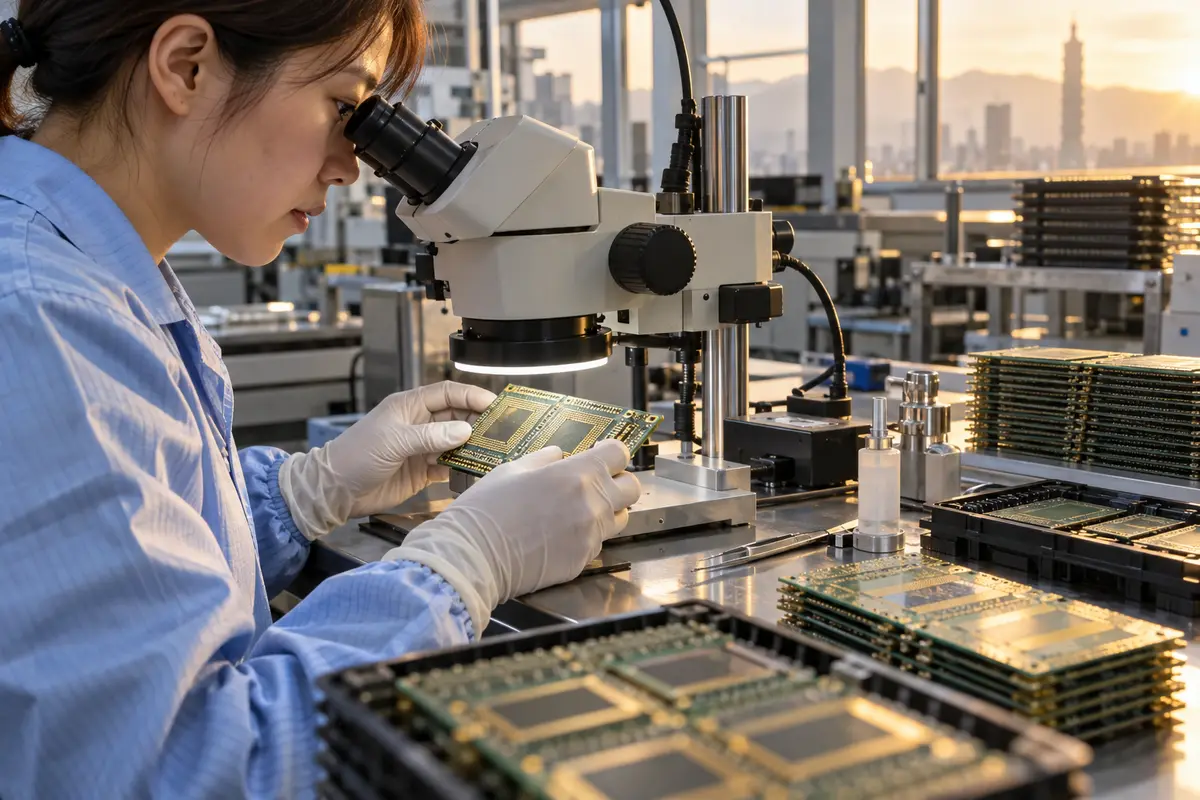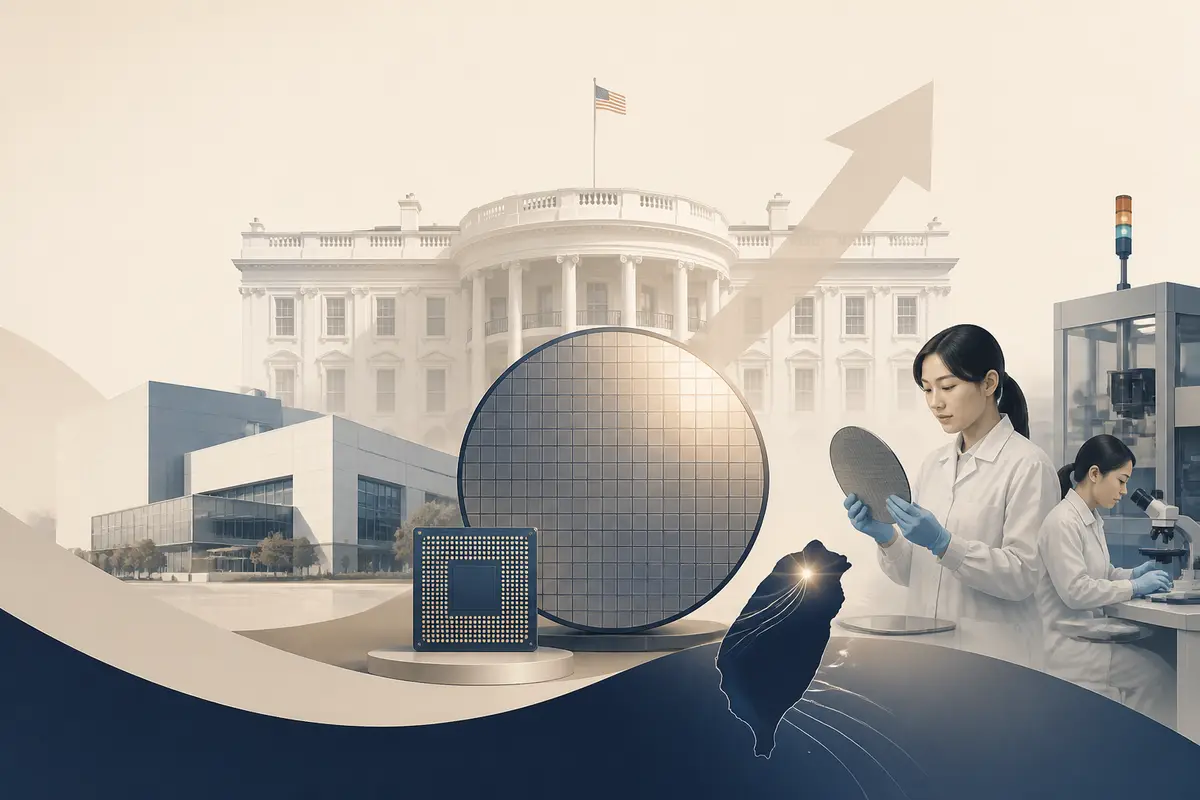
The Wall Street Journal reported on August 9, 2026, that Apple had tested dynamic random-access memory (DRAM) from China's ChangXin Memory Technologies (CXMT) across product lines including iPhones and MacBooks, citing people familiar with the matter. The report said early supply talks were aimed at using the components in some devices sold in China.
The report described testing and early talks, not a purchase order. Reuters' July 7 summary of an earlier Financial Times report likewise said Apple had not committed to commercial use. Neither Apple nor CXMT had publicly confirmed the reported tests or announced a supply agreement at the time of writing.

Testing is not a purchase decision
Component qualification checks whether a part meets a manufacturer's electrical, performance, reliability, thermal and production requirements. Passing those tests can make a component eligible for future orders. It does not establish that the buyer will place an order, how large that order would be or which finished products would use the part.
The reports do not identify a CXMT part number, a test result or a proposed volume. They also do not name particular iPhone or MacBook models. The reported China-only supply goal narrows the potential deployment, but it does not turn a test across product lines into a confirmed product plan.
Qualifying another supplier could give Apple more flexibility in a shortage and another option in price negotiations. Those are possible effects, not a motive Apple has confirmed. The public record does not show that Samsung Electronics, SK hynix or Micron Technology has lost an Apple order or changed a price because of the CXMT tests.
The memory squeeze is the commercial backdrop
TrendForce said conventional DRAM contract prices rose about 93 to 98 percent quarter on quarter in the first quarter of 2026. The research firm said supplier inventories remained extremely low in the second quarter and that manufacturers were directing incremental supply toward high-capacity server memory, limiting availability for PC and smartphone makers.
AI servers do not use exactly the same memory products as every phone or laptop. The pressure spreads because the same large suppliers allocate investment, wafer starts and production upgrades among high-bandwidth memory, server DRAM and consumer products. A buyer that qualifies another mobile or PC DRAM source gains a supply option even if that supplier cannot replace every product made by the three market leaders.
Price and availability are separate questions. A fourth supplier may have available capacity without offering a lower price, and a lower quote would not help if the component failed qualification. The cited reports disclose neither CXMT's proposed price to Apple nor the amount of capacity it could reserve.
CXMT's scale depends on the metric
CXMT says it was founded in 2016 and manufactures DRAM for phones, PCs, tablets and servers. DRAM provides working memory while a device is powered. It is distinct from the nonvolatile storage supplied by flash-memory producers.
Reuters reported from CXMT's prospectus that the company was the world's fourth-largest DRAM producer with a 7.7 percent market share in 2025. CXMT raised 57.92 billion yuan (US$8.6 billion) in its July 2026 initial public offering in Shanghai.
An earlier Financial Times account, summarized by Reuters, put CXMT at about 11 percent of global DRAM wafer capacity in 2025. Wafer-capacity share and market share are different measures, and the available summaries do not provide enough methodology to convert one into the other. This report therefore does not present 11 percent as CXMT's share of DRAM sales.
CXMT and YMTC are not the same supplier
CXMT and Yangtze Memory Technologies Co. (YMTC) appear together in the US policy debate, but their core products differ. CXMT makes DRAM, while YMTC identifies itself as a designer and manufacturer of 3D NAND flash memory. The August 9 report concerns CXMT DRAM, not YMTC NAND.
The distinction also matters when reading policy documents. A restriction or licensing requirement attached to one company does not automatically apply to the other. Likewise, a test of working-memory chips does not establish that Apple is reviving its reported 2022 evaluation of YMTC storage components.

US designations create political and compliance risk
A US Department of Defense notice published in January 2025 listed both CXMT and YMTC as “Chinese military companies” under Section 1260H. That wording is a US government designation. It should not be restated as an independently proven ownership or operational relationship.
Seven US senators wrote to Apple on July 29, 2026, saying both companies remained on an updated June list and urging Apple to reject their memory products. The letter asked Apple to describe its qualification work, any technical information shared with the suppliers and its supply-chain risk assessment by August 21. Those questions document congressional scrutiny; they do not establish that Apple transferred controlled technology. The deadline had not passed at publication, so this report does not assess an Apple reply.
The Defense Department designation is not the same as an entry on the US Commerce Department's Entity List. The US Bureau of Industry and Security added YMTC to the Entity List in December 2022 and said listed parties face specific licensing requirements under the Export Administration Regulations. The senators' letter cites the Entity List designation for YMTC but not for CXMT, which shows why describing both companies as subject to the same trade restriction would be inaccurate.
A future Apple-CXMT transaction would have to be checked against the rules, products and technology transfers in effect at that time. The public documents reviewed for this report do not supply a final licensing determination for the reported test or for a hypothetical purchase. They establish political opposition and policy exposure, not a completed enforcement action against Apple.
What the test could change for existing suppliers
A successful qualification could give Apple the option to source some China-market memory from CXMT. The commercial effect would depend on the approved part, available volume, contract price and duration. None of those terms is public.
Without those terms, claims that the test will force Samsung Electronics, SK hynix or Micron to cut prices remain market interpretation. The same applies to predictions that Apple will move a large share of orders to CXMT. Testing creates an option; it does not show that Apple has exercised it.
The evidence supports a narrower conclusion. Apple is examining a Chinese DRAM supplier during a supply squeeze, while US lawmakers are trying to prevent that supplier from entering Apple's production chain. Technical qualification, commercial negotiations and US policy could each stop or reshape the plan before any device ships with CXMT memory.
Frequently asked questions
Has Apple decided to buy CXMT memory?
No decision has been announced. The reports describe component testing and early talks for some devices sold in China, and the earlier Financial Times account said Apple had not committed to commercial use.
Is CXMT banned from supplying Apple?
The cited documents do not answer that question with a blanket yes or no. They establish a US Defense Department designation, a congressional request and separate Commerce Department restrictions on YMTC; the licensing outcome for a specific Apple-CXMT transaction has not been published.
Will the tests reduce Apple's orders from Samsung Electronics, SK hynix or Micron?
There is no public order volume or allocation change to measure. CXMT could become an additional option if it passes qualification and clears policy hurdles, but testing alone does not show that an incumbent supplier has lost business.
Sources and further reading
- Apple Tests Chinese Memory Chips as Supply Squeeze Bites(The Wall Street Journal)
- Apple tests CXMT memory chips for China devices as DRAM maker gains clout: FT(Reuters via Investing.com)
- Rapid Contract Price Surge Drives 1Q26 DRAM Industry Up 81% QoQ, Says TrendForce(TrendForce)
- What is CXMT and how did it become China's DRAM champion?(Reuters via MarketScreener)
- About CXMT(CXMT)
- Company Profile(YMTC)
- Notice of Availability of Designation of Chinese Military Companies(US Department of Defense)
- Letter to Apple CEO Tim Cook regarding PRC memory producers(Office of US Senator Chuck Schumer)
- Commerce Adds 36 to Entity List(US Bureau of Industry and Security)