Intel CEO Lip-Bu Tan discussed advanced memory and packaging as possible sources of further gains in AI computing in an interview published on August 11, 2026. The TechSurge episode covered new memory architectures and Intel’s longer-term strategy; it did not announce a product.
That distinction limits what can be inferred from his comments. Intel is examining ways to put compute and memory closer together, but it has not disclosed a new dynamic random-access memory (DRAM) or NAND flash product, a memory fabrication project or a production date.

Intel has described integration work, not a DRAM return
Tan gave a more concrete outline during Intel’s second-quarter earnings call on July 23, 2026. He said Intel was working on ways to integrate compute and memory, improve memory utilization and use stacking. He also said the company was collaborating with the three large memory suppliers to serve customers during a supply constraint.
None of those statements commits Intel to making commodity DRAM or NAND wafers. A processor company can integrate third-party memory through package design, interconnects and system architecture without owning the memory dies. That route is closer to Intel’s disclosed organization and technology portfolio.
Intel appointed Seok-Hee Lee, a former chief executive of South Korea’s SK hynix, as an executive vice president of Intel Foundry on June 18, 2026. Intel said Lee would lead advanced packaging, system integration, back-end technology development and back-end manufacturing. The announcement did not assign him responsibility for DRAM or NAND production.
Intel’s previous exits left it without a disclosed memory line
Memory was central to Intel’s early business. Intel introduced its 1103 DRAM in 1970, then stopped producing DRAM in 1985 amid an industry downturn.
Intel agreed in October 2020 to sell its NAND flash and solid-state drive businesses to SK hynix for US$9 billion. Intel’s 2022 annual filing says the first closing took place on December 29, 2021 and that the company began winding down Intel Optane in 2022. The same filing records a US$723 million Optane inventory impairment.
The NAND transaction took several years because Intel continued manufacturing wafers between the two closings. Intel reported that the second and final closing occurred on March 27, 2025, for about US$1.9 billion after adjustments. Reversing those exits would require a separate commitment that Intel has not made publicly.
Three suppliers dominate DRAM and high-bandwidth memory revenue
The market Intel would face as a conventional producer is concentrated. Counterpoint Research estimated that Samsung held 38 percent, SK hynix 29 percent and Micron 22 percent of global DRAM revenue in the first quarter of 2026. Their combined share was 89 percent.
Counterpoint’s high-bandwidth memory (HBM) table assigned 58 percent of first-quarter 2026 revenue to SK hynix and 21 percent each to Samsung and Micron. HBM stacks multiple DRAM dies near processors to provide the data-transfer rates used by AI accelerators. It is more closely tied to advanced packaging than a conventional memory module is.
NAND is less concentrated, though Intel would still face established producers. Counterpoint put Samsung at 29 percent of first-quarter 2026 NAND revenue, followed by SK hynix at 18 percent and Kioxia at 14 percent. Micron, SanDisk and China’s Yangtze Memory Technologies Co. each held 13 percent in the same estimate.
These are quarterly revenue estimates, so price changes can shift the shares even when unit shipments move differently. They nevertheless show the scale and customer relationships a new memory manufacturer would need.
Advanced packaging provides a narrower path back into memory
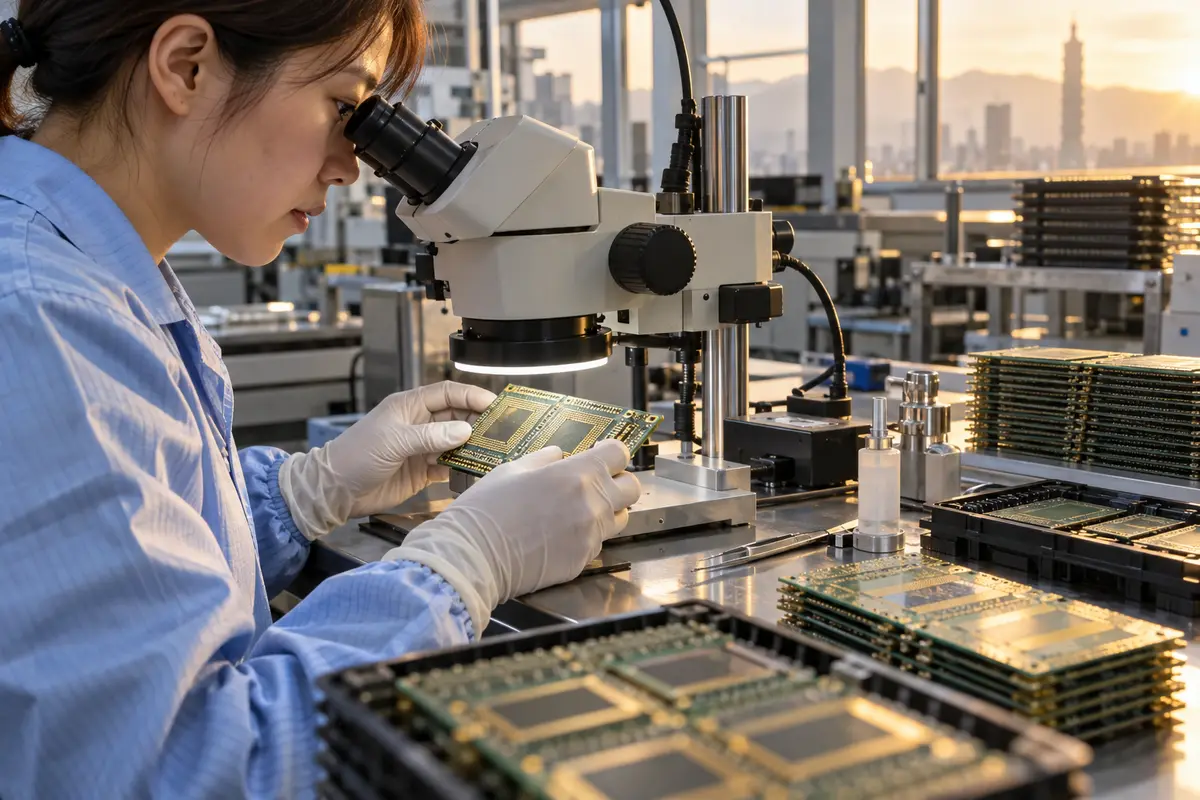
Intel already sells technologies for joining logic and memory inside large packages. Intel Foundry says its Embedded Multi-die Interconnect Bridge connects logic and HBM side by side, while Foveros Direct supports three-dimensional chiplet stacking. Those processes can increase bandwidth and reduce the power used to move data without making the memory die itself.
This makes packaging and system integration the clearest reading of Intel’s public comments. Lee’s stated role covers the manufacturing steps that connect dies after front-end wafer fabrication, and Tan has discussed stacking and memory utilization. Intel has not identified which memory supplier, processor family or customer would participate in a future design.
The distinction also separates capacity from bandwidth. Software can stretch usable server memory by moving less-active data to flash, while HBM and package interconnects address how quickly data reaches a processor.
Foundry losses put a high bar on another capital-intensive bet
Intel is considering the memory work while its manufacturing segment remains unprofitable. Intel Foundry reported revenue of US$5.765 billion and an operating loss of US$2.089 billion for the second quarter of 2026. The segment figure includes intersegment transactions, and the filing says substantially all of its work supported internal Intel products; external revenue was US$293 million.
The quarterly loss does not prove that the memory study is a response to foundry performance. Intel has not described the work as a second growth business or assigned it a budget. The figures instead show why a new front-end memory fabrication program would need much stronger evidence than an interview or an exploratory architecture effort.
A product decision would require disclosures that do not exist yet
A formal return to memory manufacturing would normally identify the product class, process technology, capacity plan and production schedule. Intel has provided none of those details. It also has not said whether the work will become an Intel product, a foundry service or a research project that uses another supplier’s memory.
APPI News could not find a public Intel timetable for the project at the time of writing. It also could not verify the reported statement that memory supply will remain constrained until 2028 from a named supplier disclosure. Those gaps make “memory integration study” a more accurate description than “return to the memory market.”
Frequently asked questions
Has Intel announced that it will manufacture DRAM again?
No. Tan has discussed compute-memory integration, stacking and new architectures, but Intel has not announced a DRAM product, fabrication line or production date.
What happened to Intel’s previous memory businesses?
Intel stopped producing DRAM in 1985, sold its NAND business to SK hynix through a transaction completed in March 2025 and began winding down Optane in 2022. Those exits are documented in Intel’s own history and filings.
Why does Seok-Hee Lee’s appointment matter?
Lee previously led SK hynix, but Intel assigned him to advanced packaging, system integration and back-end manufacturing. His remit supports combining logic and memory in a package; it is not an announcement that Intel will fabricate memory wafers.
What would confirm a full return to memory?
Evidence would include an Intel product announcement, named memory technology, capital allocation, manufacturing site and production schedule. None was public as of August 16, 2026.
Sources and further reading
- Intel CEO Lip-Bu Tan on 40 Years of Contrarian Bets in Semiconductors(TechSurge)
- Q2 2026 Intel Corporation Earnings Conference Call(Intel)
- Intel Announces Leadership Appointment at Intel Foundry(Intel)
- Global DRAM and HBM Market Share: Quarterly(Counterpoint Research)
- Global NAND Memory Market Share: Quarterly(Counterpoint Research)
- The Intel 1103 DRAM(Intel)
- Farewell to DRAM(Intel)
- SK hynix to acquire Intel NAND memory business(SK hynix)
- Intel 2022 Form 10-K(Intel)
- Completion of the Intel NAND divestiture(Intel)
- Intel Q2 2026 Form 10-Q(Intel)
- Advanced Packaging Innovations(Intel Foundry)