Australia's government-funded Healthdirect service and England's National Health Service (NHS) advise using a gentle flow of clean water to clear loose debris from the surface of the eye. An object that penetrates the eye, arrives at high speed or remains stuck needs medical care rather than repeated attempts at removal.
Chemical exposure follows a different first-aid sequence: irrigation must begin immediately and continue while urgent help is arranged. Contact lens wearers should stop if normal removal is not working or discomfort develops and arrange professional assessment.
Chemicals, penetration and sight changes need urgent care
Arrange emergency assessment after a chemical splash, a sharp object piercing the eye or an impact from fast-moving debris produced by drilling, grinding, cutting, mowing or similar work. Do not pull out an embedded or protruding object or keep testing whether it will move.
England's NHS also lists any change in sight, severe eye pain, light sensitivity, inability to move or keep the eye open, and blood or pus from the eye as reasons for emergency care. Nausea, vomiting or headache after an eye injury adds to the concern, and the injured person should not drive if vision or pain makes travel unsafe.
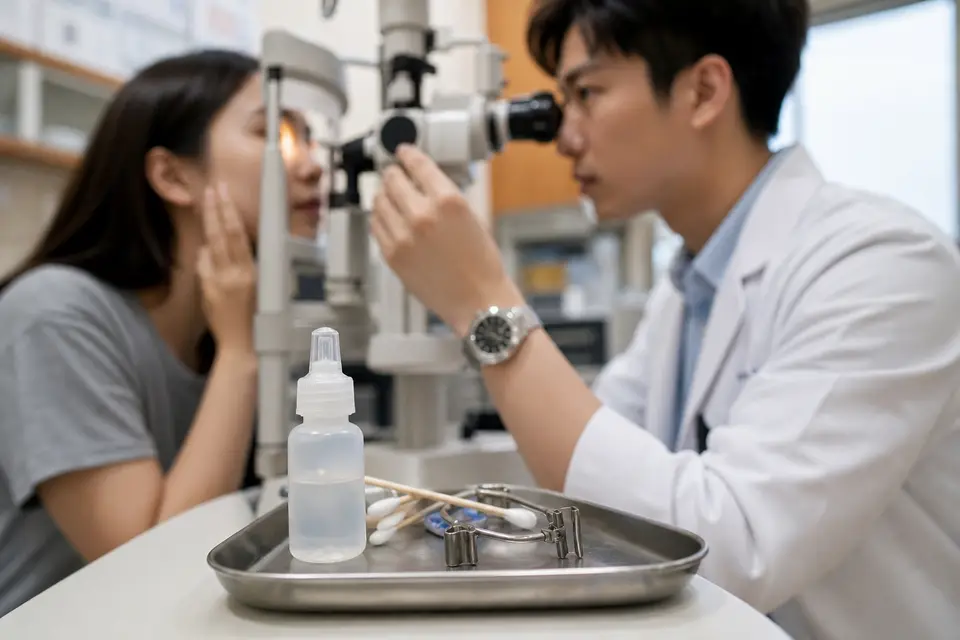
Worsening pain, blurred or lost vision, black spots, colored discharge, bleeding or a white or yellow spot on the eye also needs prompt assessment. Healthdirect advises medical care after debris from drilling, cutting or grinding and whenever a chemical or penetrating object is involved.
Loose surface debris can be rinsed gently
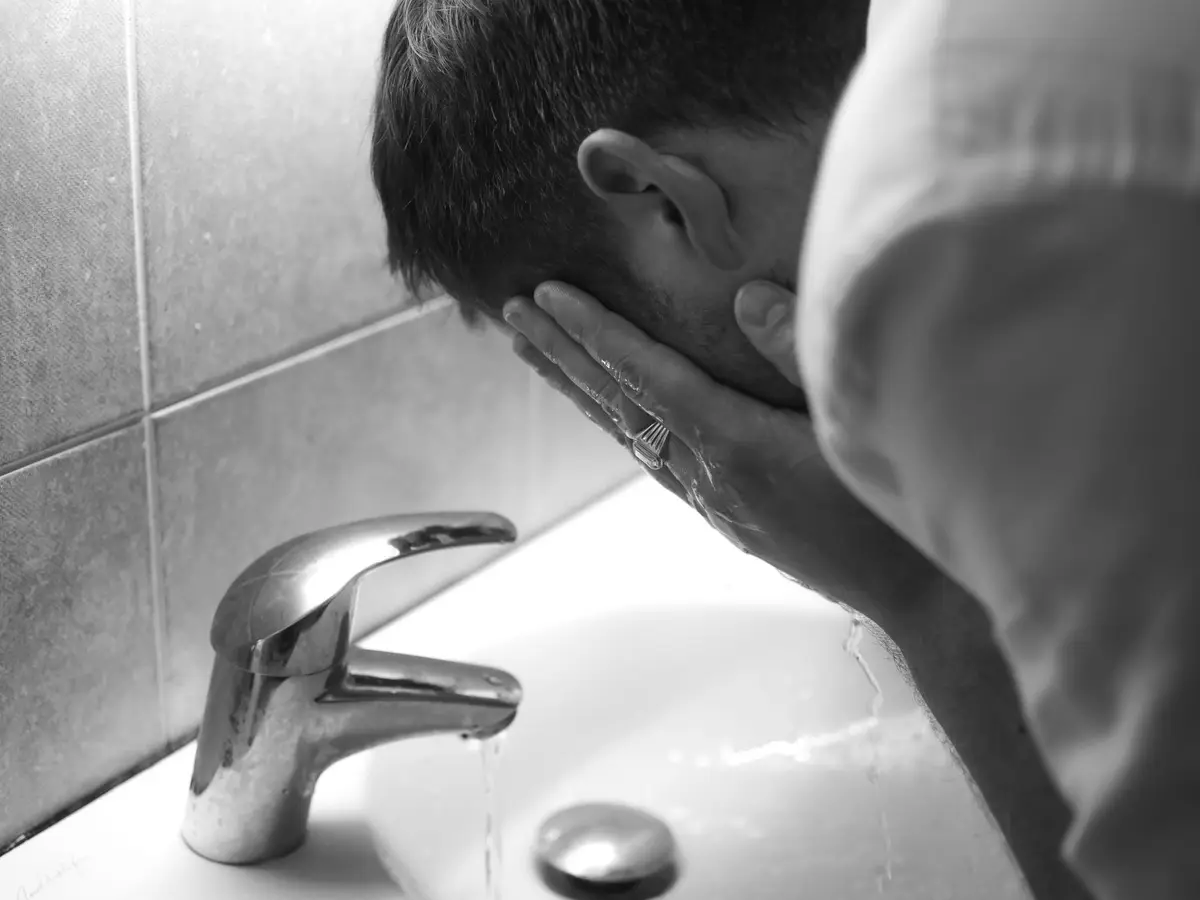
Wash and dry the hands before touching the area around the eye. Do not rub the eye, because rubbing can worsen irritation or an abrasion, and do not use fingers or tools to probe for material that is not freely floating on the surface.
Hold the eyelids open and let a gentle stream of clean, lukewarm water run across the eye. Sterile saline is another option for a small object on the surface. The flow should be gentle, and rinsing should stop if the injury appears to involve penetration rather than loose dust, grit or an eyelash.
Do not keep manipulating the eye if rinsing fails. Healthdirect advises obtaining medical help when a surface object does not come out with gentle irrigation.

Chemical exposure requires immediate, prolonged irrigation
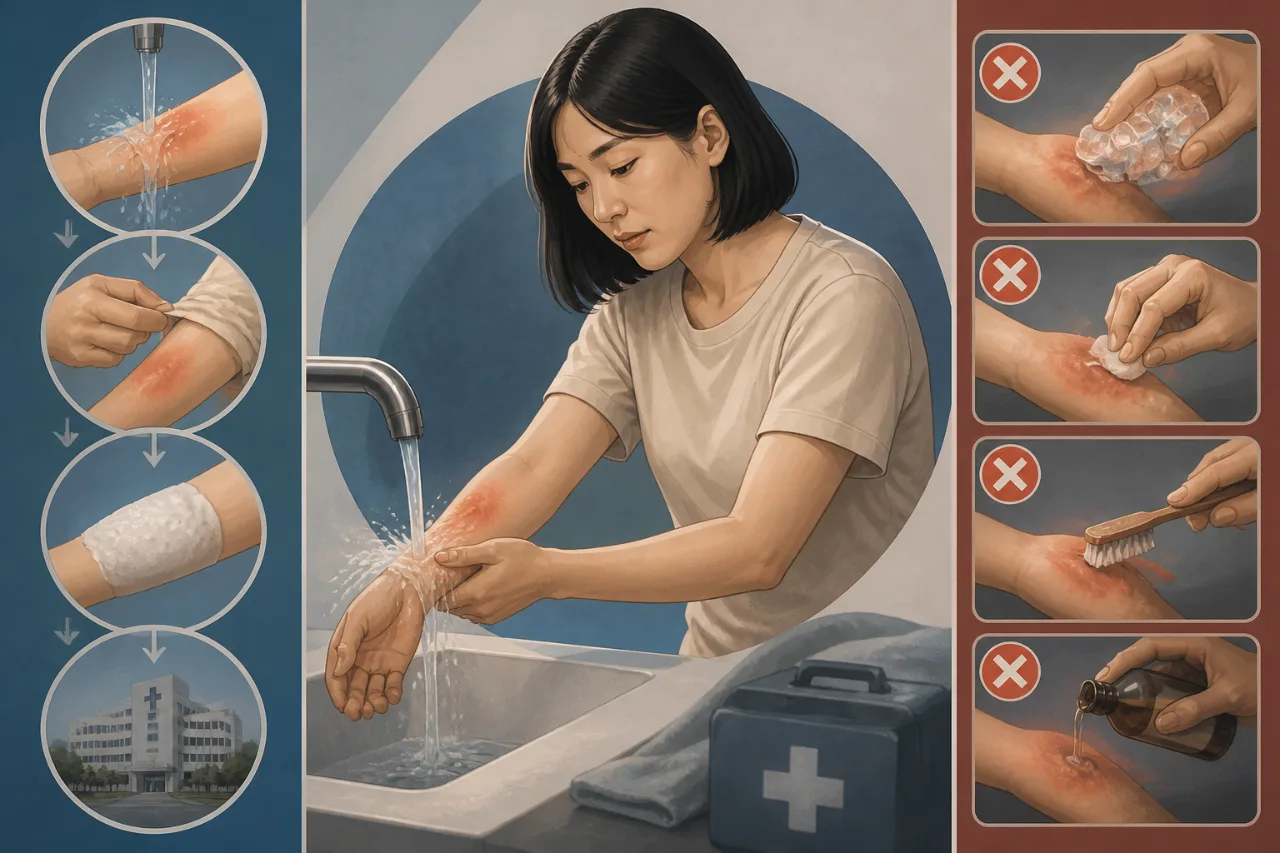
Start rinsing as soon as a chemical reaches the eye. Hold the eyelids open and direct clean, cool or lukewarm water across the affected eye for at least 20 minutes, keeping the flow gentle and angled away from the other eye.
The NHS says to keep rinsing a strong chemical exposure while waiting for emergency help and to take the product container for treatment information. Follow relevant safety instructions on the label, but do not postpone irrigation to search for the container.
Healthdirect advises trying to remove a contact lens after an exposure unless the eye's surface appears badly damaged. Do not interrupt rinsing or pull at the eye if the lens will not move.
A stuck contact lens needs a cautious stop point
Wash the hands with soap and water and dry them completely before attempting the usual removal method taught by an eye care provider. If the lens does not come out normally, stop repeated pinching, scraping or pulling and contact an eye care professional.
The US Centers for Disease Control and Prevention (CDC) advises removing lenses and contacting an eye care provider when discomfort occurs. Pain, redness, blurred vision, light sensitivity or persistent tearing after lens wear calls for prompt assessment rather than another attempt.
Do not soak an eye while wearing a contact lens or use tap water to loosen, rinse or store the lens. The CDC says water can make a soft lens change shape, swell and stick to the eye, while germs in water can cause serious infection.
Rubbing, probing and unprescribed drops can cause more harm
Do not rub the eye or try to lift out material with fingernails, tweezers or another tool. Never remove an object that appears embedded or protrudes between the eyelids.
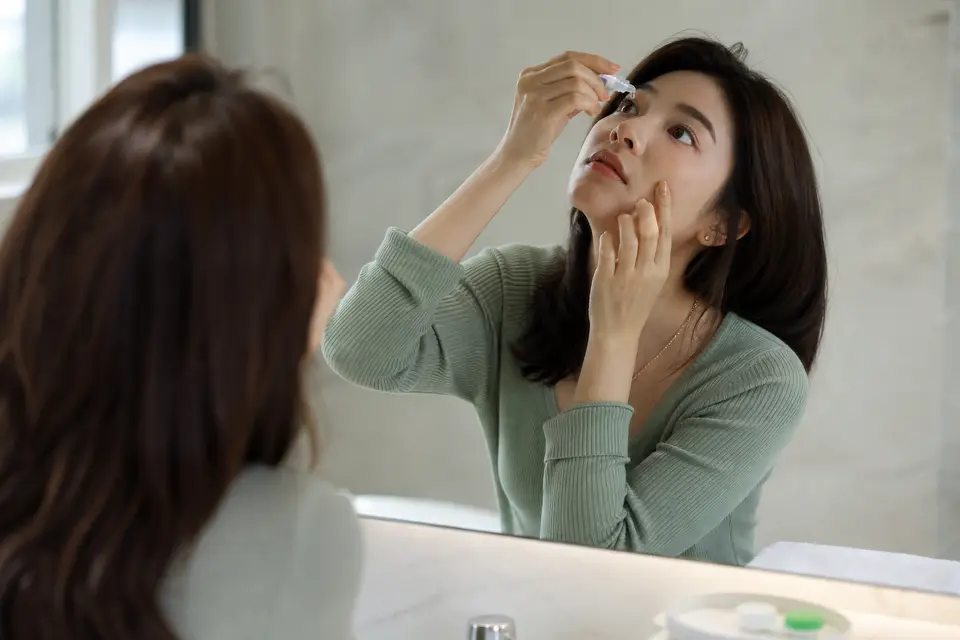
Do not use anesthetic, steroid or antibiotic eye drops unless a clinician has prescribed them for the injury. Symptoms alone cannot show whether the problem is a superficial scratch, retained material, infection or deeper damage.
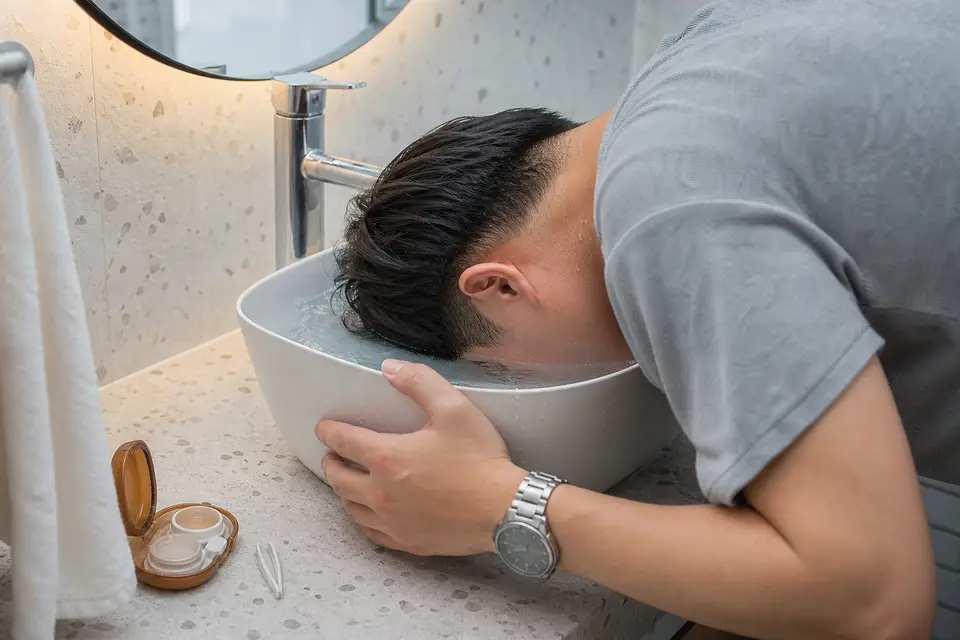
A bowl of standing water is not a substitute for controlled irrigation. The cited guidance describes a gentle, continuous flow across the open eye, while embedded material requires medical care rather than more forceful washing.
Children, pregnancy and chronic illness require separate judgment
Children
A child may not be able to describe a vision change or remain still for safe irrigation. England's NHS sets a lower threshold for seeking advice when a child has an eye injury, particularly when the child is younger than five, and caregivers should not repeatedly restrain a child to probe the eye.
Pregnancy
The cited national guidance does not describe a different rinsing method during pregnancy. A pregnant person should use immediate irrigation for chemical exposure and seek care for the same warning signs, while medicine decisions belong with a clinician.
Chronic illness and regular medicines
APPI News could not verify a separate debris-removal method for chronic illness or long-term medicine use from the cited sources. Bring a current medicine list when obtaining urgent care, and do not start, stop or apply a medicine to the eye without clinical direction.
Frequently asked questions
What should happen first when dust or an eyelash gets into the eye?
Do not rub. Wash the hands, hold the eyelids open and use a gentle flow of clean, lukewarm water or sterile saline for loose surface debris.
When is an object in the eye an emergency?
A penetrating or embedded object, high-speed debris, sight changes, severe pain, light sensitivity, bleeding, discharge or inability to open or move the eye requires urgent assessment.
How long should a chemical splash be rinsed?
Begin immediately and continue for at least 20 minutes while arranging urgent help. Keep the flow gentle and direct it away from the unaffected eye.
What if a contact lens will not come out?
Stop repeated pulling or scraping and contact an eye care professional. Pain, redness, light sensitivity, persistent tearing or blurred vision needs prompt assessment.
Can tap water be used?
Clean running water is appropriate for irrigating the eye, especially when a chemical requires immediate flushing. Tap water should not be used to rinse or store a contact lens, and a lens should not remain in place during water activities.
Sources and further reading
- Objects or chemicals in the eye(Healthdirect Australia)
- Eye injuries(National Health Service in England)
- Preventing eye infections when wearing contacts(US Centers for Disease Control and Prevention)
- Keeping water away from contact lenses(US Centers for Disease Control and Prevention)