
Reuters reported on August 4 that the Trump administration was drafting a ban on imports of new Chinese optical transceiver models. Four people familiar with the work said the US Federal Communications Commission (FCC) was preparing the measure and wanted it to take effect by the end of 2026.
No proposed rule or order was public at the time of writing. The sources said the FCC could change or abandon the restriction, while the White House and the agency did not respond to requests for comment.
The proposal targets links inside AI computing clusters
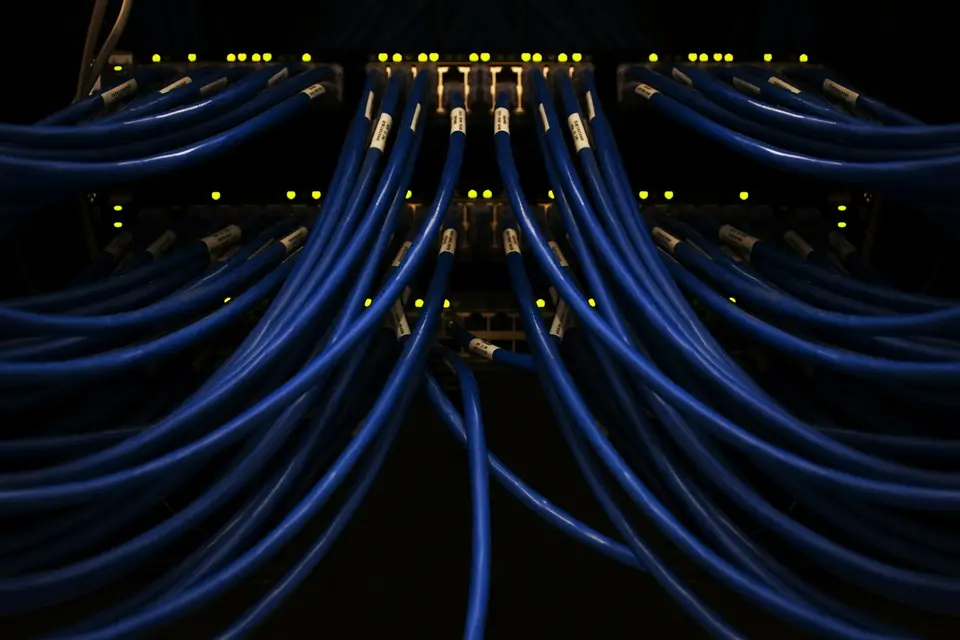
Optical transceivers are compact modules that convert electrical signals into light for transmission over fiber and convert incoming light back into electrical signals. They sit in ports on servers and network switches, allowing computing systems to exchange data at high speed.
NVIDIA says optical transceivers connect graphics processor-based AI systems to top-of-rack and larger data-center switches. Training a large model distributes work across many processors, making the network between those processors part of the computing system rather than a peripheral connection.
No public text defines the restriction
The reported plan would focus on new models made in China and exempt many products from non-Chinese suppliers. Without an FCC document, however, it is not possible to verify which product categories, manufacturers or technical specifications would fall within the measure.
The legal route also remains unclear. The Reuters account describes the FCC as the agency preparing the restriction, but APPI News could not find a public docket, draft order or implementation schedule for optical transceivers.
Existing FCC rules show how new-model restrictions can work
The FCC already uses its Covered List to block equipment it says presents an unacceptable national-security risk from receiving new equipment authorizations. That process is relevant background, but the agency has not said publicly that the reported transceiver proposal will use the same mechanism.
When the FCC added foreign-made consumer routers to the Covered List in March 2026, it said the restriction applied to new models and did not prohibit previously authorized products. The same notice said the FCC updates the list in response to determinations from US national-security authorities and described a conditional-approval process for exempted manufacturers.
Suppliers and data-center operators face uncertain costs
The reported measure would put Chinese manufacturers, including Zhongji Innolight, at risk of losing orders for new products in the United States and could push buyers toward suppliers such as Coherent and Lumentum. US data-center operators would still have to qualify any alternative modules for their systems.
That change would not be an automatic one-for-one substitution. Operators must account for performance, compatibility, reliability and available production capacity, and no public assessment establishes the cost or timing of a transition.
China warns of a response
The Chinese Embassy in Washington urged the United States to stop what it called the smearing of Chinese companies and threats of sanctions. It said China would take necessary measures against action that materially harmed Chinese interests, without identifying a specific response to the reported transceiver plan.
The next verifiable step would be publication of an FCC proposal, order or docket setting out the products covered and the authority used. Until then, the measure remains a reported draft rather than an enacted US import restriction.
Sources and further reading
- US mulling ban on key Chinese networking tech in data center component crackdown(Tom's Hardware)
- FCC updates Covered List to include foreign-made consumer routers(US Federal Communications Commission)
- NVIDIA LinkX Ethernet optical transceivers(NVIDIA)