
The American Heart Association said in December 2025 that gum disease remains associated with cardiovascular disease, but evidence has not established cause and effect. By contrast, a 2022 Cochrane review found that treating periodontitis modestly improved blood glucose control in people with diabetes.
The distinction matters because the same condition can have different levels of evidence for different outcomes. Periodontitis destroys the tissues and bone that support teeth. It also occurs alongside several long-term conditions, but an observed association does not show that periodontal treatment will prevent those conditions.
Severe gum disease affects more than 1 billion people
The World Health Organization estimates that severe periodontal diseases affect more than 1 billion people worldwide. The condition can begin with bleeding or swollen gums and progress until gums pull away from teeth, supporting bone is lost and teeth loosen or fall out.
Plaque accumulating around and below the gumline drives inflammation in the supporting tissues. Tobacco use and poor oral hygiene are established risk factors. Diabetes is linked to the development and progression of periodontal disease in both directions, while several cardiovascular risk factors also overlap with gum disease.
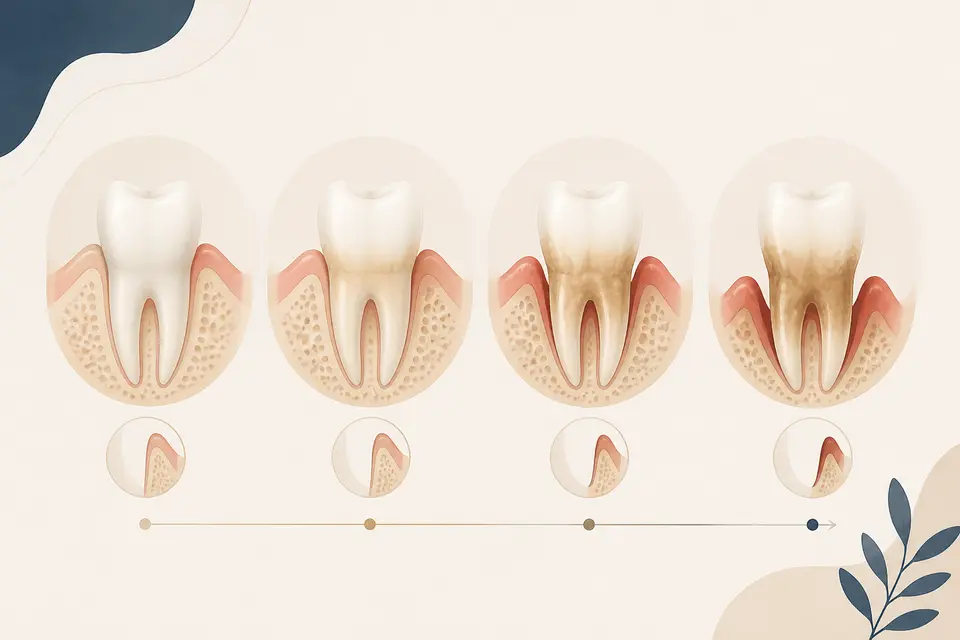
Warning signs need dental assessment
Bleeding during brushing, painful or swollen gums, persistent bad breath and gum recession warrant a dental examination. The United Kingdom's National Health Service advises an urgent dental appointment for very sore and swollen gums, loose teeth, mouth ulcers or red patches, or a lump in the mouth or on the lip.
NHS England classifies spreading facial swelling that threatens the airway, severe systemic illness caused by a dental condition and uncontrolled oral bleeding as emergencies. Rapidly worsening swelling also needs urgent assessment, while emergency numbers and dental access routes differ by country.
Diabetes has the clearest two-way link
High blood glucose can impair immune responses and make periodontal inflammation harder to control. In the other direction, inflammation from periodontitis may make glucose control more difficult. This reciprocal relationship does not mean that dental treatment replaces diabetes care.
A 2022 Cochrane review found that professional treatment below the gumline reduced glycated hemoglobin, or HbA1c, by an average 0.43 percentage points after three to four months compared with no active treatment or usual care. The estimate came from 30 trials involving 2,443 participants with diabetes and periodontitis.
The review found an average reduction of 0.30 percentage points at six months across 12 studies. At 12 months, the estimated reduction was 0.50 percentage points, but that result came from one study with 264 participants. Cochrane rated the overall evidence as moderate certainty, although most trials had a high or unclear risk of bias and almost all participants had type 2 diabetes.
Periodontal treatment should therefore be understood as treatment for diagnosed gum disease that may also support glucose management. It does not replace prescribed medicines, nutrition plans, physical activity or monitoring arranged by a diabetes care team.
Cardiovascular evidence stops short of causation
The American Heart Association's 2025 scientific statement found an association between periodontal disease and heart attack, stroke and other cardiovascular outcomes, but said a cause-and-effect relationship had not been confirmed. It also found no direct evidence that periodontal treatment prevents cardiovascular disease.
The biological case remains plausible. Bacteria entering the blood and chronic systemic inflammation could connect disease in the gums with changes in blood vessels. Plausibility is not proof, however, and gum disease shares risk factors with cardiovascular disease, including smoking, age and diabetes.

Trials of periodontal treatment have not supplied the missing evidence. A 2022 Cochrane review found very-low-certainty and inconclusive evidence for preventing a first cardiovascular event, and no reliable evidence for preventing subsequent events. Treating periodontitis protects oral health, but it should not be presented as a proven method of preventing a heart attack or stroke.
Pregnancy evidence does not support a promise on preterm birth
Pregnancy can change gum health, and bleeding or swelling should be assessed by a dental professional. The treatment plan may need to account for the stage of pregnancy, other health conditions and medicines, so pregnant patients should discuss dental care with the clinicians responsible for their care.
A Cochrane review of 15 randomized trials found no clear reduction in births before 37 weeks after periodontal treatment during pregnancy. It reported a possible reduction in babies born below 2,500 grams, but rated both findings as low certainty. The evidence search ended in October 2016, limiting how confidently the review describes current knowledge.
The result does not argue against treating gum disease during pregnancy. It means treatment should be recommended for oral disease on its own merits, without promising that it will prevent preterm birth or low birth weight.
Age and medical history change the care plan
Children and adolescents with sore or bleeding gums need age-appropriate dental assessment rather than an adult treatment schedule. A dentist must distinguish plaque-related inflammation from injury, infection and less common conditions before planning care.
People with diabetes should tell both their dental and diabetes care teams about changes in gum health or glucose control. Those taking prescription medicines, living with cardiovascular disease, receiving cancer treatment or managing another chronic condition should provide a current medical and medication history before periodontal procedures. Dental coverage, referral routes and treatment availability vary across health systems.

The evidence supports treatment for oral health
Periodontitis is reason enough to seek care because it can destroy supporting bone, loosen teeth and impair eating. Its connection with diabetes adds a measurable systemic benefit for some patients, but the size and durability of that effect vary across the evidence.
For cardiovascular disease and adverse pregnancy outcomes, current reviews do not justify prevention claims. A report should separate three questions: whether two conditions occur together, whether one causes the other and whether treating one changes the outcome of the other. For gum disease, those answers are not interchangeable.
Frequently asked questions
Can gum disease make diabetes harder to control?
Periodontitis and diabetes have a reciprocal relationship. A 2022 Cochrane review found that periodontal treatment lowered HbA1c by an average 0.43 percentage points after three to four months in people who had both conditions. The treatment complements, rather than replaces, the diabetes plan set by a clinician.
Will treating gum disease prevent a heart attack?
Current evidence does not establish that benefit. The American Heart Association reports an association between periodontal and cardiovascular disease, while Cochrane found no reliable evidence that periodontal treatment prevents first or subsequent cardiovascular events.
Does periodontal treatment prevent preterm birth?
A Cochrane review found no clear reduction in births before 37 weeks, and it rated the evidence as low certainty. Pregnant patients still need assessment and treatment for gum disease itself, with a plan adapted by their dental and maternity clinicians.
When should bleeding gums be checked?
Bleeding during brushing, painful swelling or persistent bad breath should be assessed by a dentist. Very sore and swollen gums, loose teeth, mouth ulcers or red patches, or a mouth lump need urgent dental assessment; breathing difficulty with spreading swelling requires emergency care.
Sources and further reading
- Oral health(World Health Organization)
- Gum disease(United Kingdom National Health Service)
- Clinical guidance: unscheduled urgent and non-urgent dental care(NHS England)
- Does treatment for gum disease help people with diabetes control blood sugar levels?(Cochrane)
- Gum disease may be linked to plaque buildup in arteries, higher risk of major CVD events(American Heart Association)
- Treating chronic gum inflammation to prevent heart and blood vessel disease(Cochrane)
- Treating gum disease to prevent adverse birth outcomes in pregnant women(Cochrane)