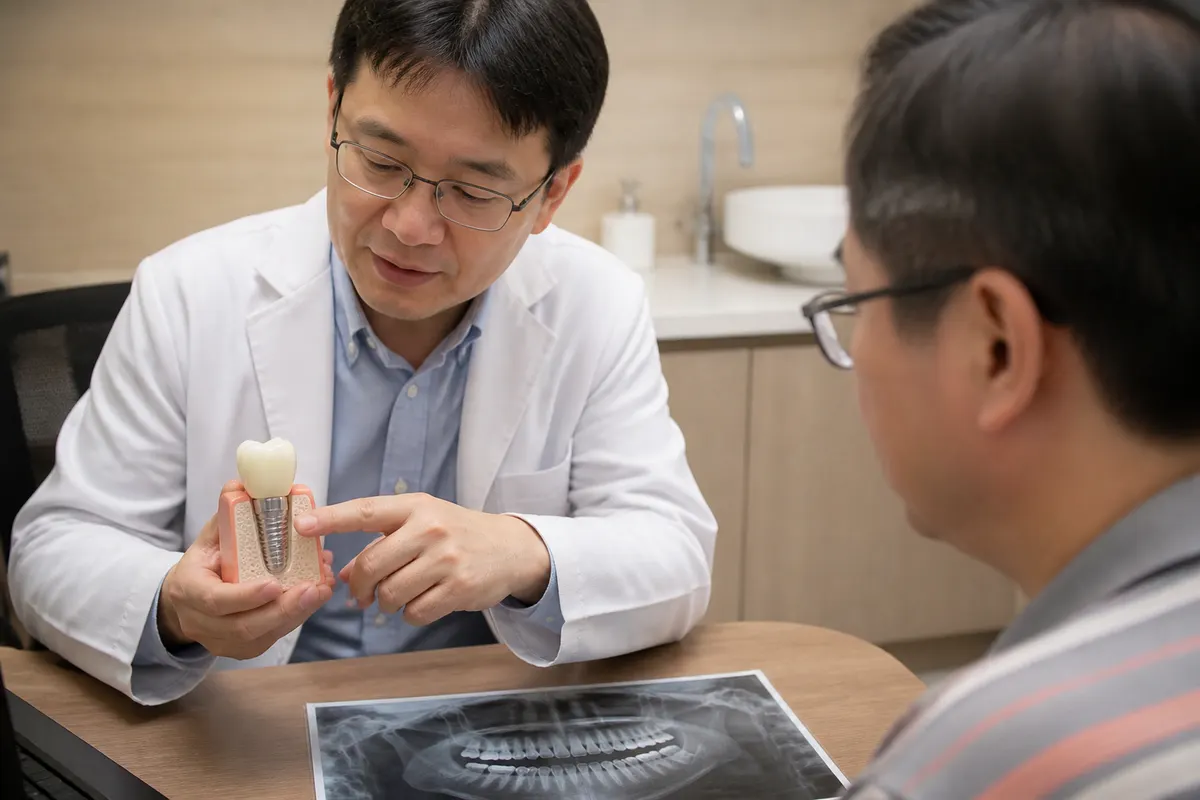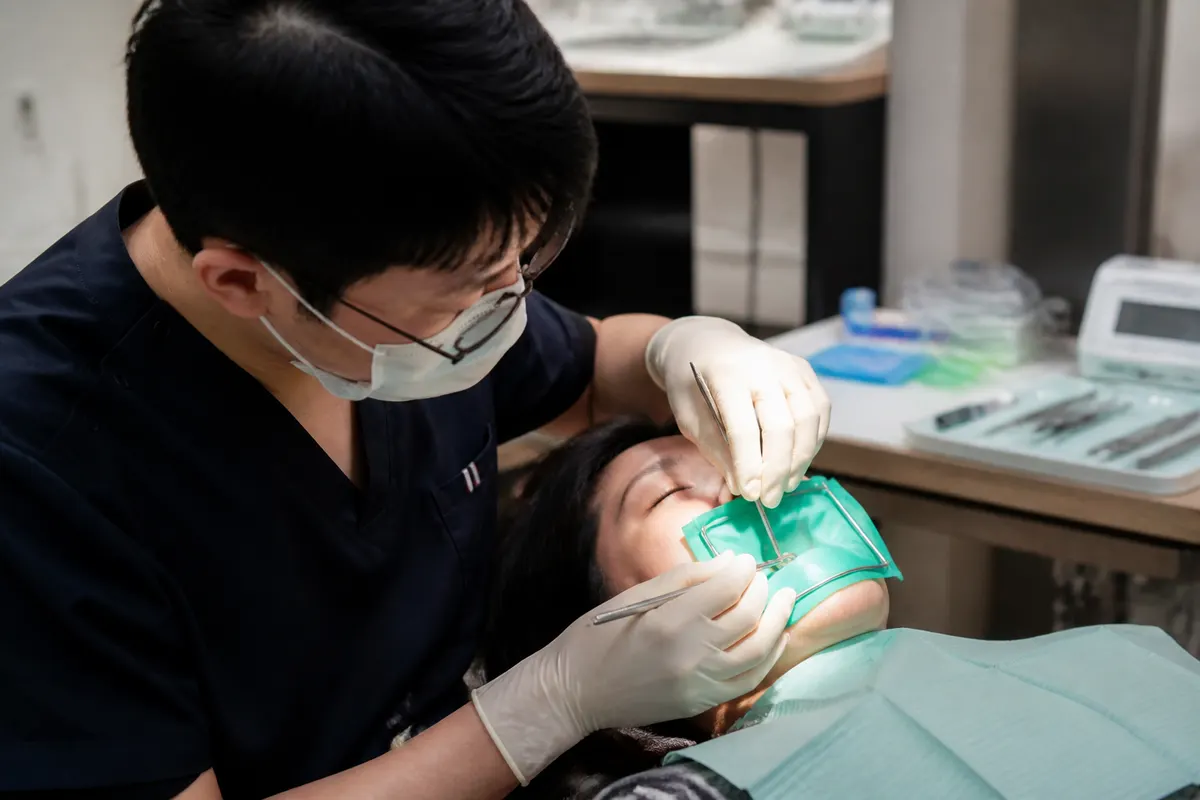
Root canal treatment removes inflamed or infected pulp, cleans and seals the canals, and preserves the outer tooth. It does not make the tooth immune to new decay, cracks or failure of the filling or crown.
The final repair may be a filling, a partial-coverage restoration or a crown. The choice depends on the tooth's position, the amount of sound structure that remains and the forces it must withstand.
What the procedure does
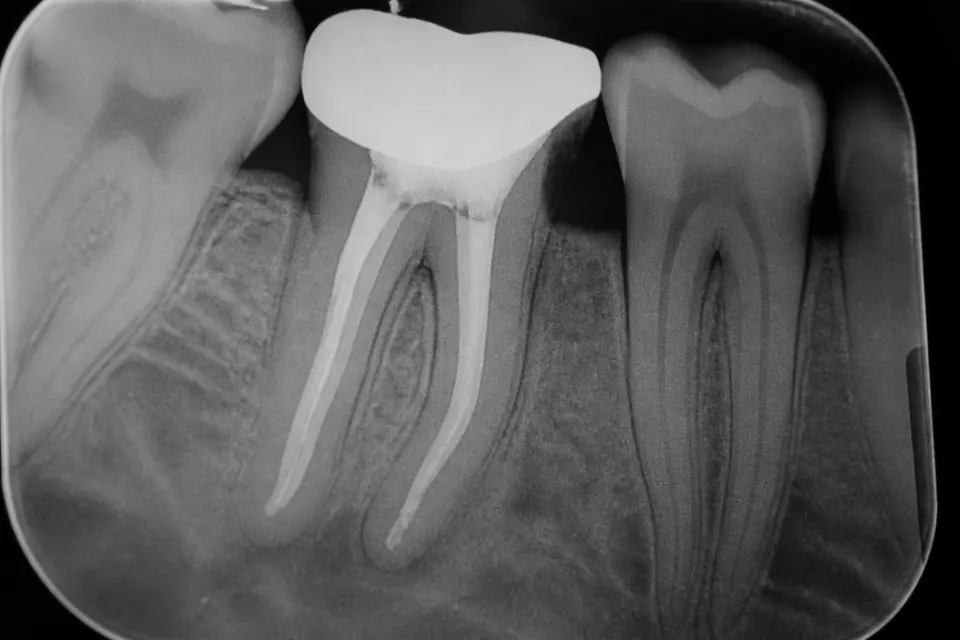
The pulp is soft tissue inside a tooth that contains nerves, blood vessels and connective tissue. Deep decay, a crack, trauma or earlier dental work can leave it inflamed or infected. The American Association of Endodontists describes root canal treatment as removing that pulp, cleaning and disinfecting the inside of the tooth, then filling and sealing the canals.
A dentist then closes and restores the tooth so it can function. The United Kingdom's National Health Service says treatment commonly takes two or more appointments, may involve a temporary filling between visits, and may require a crown when a tooth was badly infected. The number and length of appointments depend on the tooth and the complexity of its canals.
When dental symptoms need urgent care
Severe tooth or mouth pain that disrupts sleep or daily activity, pain that persists despite pain relief, an enlarging swelling or lump, a knocked-out tooth, or a broken or loose filling or crown needs urgent dental assessment. The United Kingdom's National Health Service lists these as reasons to seek urgent or emergency dental care.
Heavy bleeding that will not stop, a serious injury to the face or jaw, or severe swelling of the mouth, lips, throat or neck that affects breathing requires emergency medical care. Children, pregnant people, those with chronic conditions and anyone taking medicines should tell the treating clinician about their circumstances before treatment. Their imaging, anesthesia, medication and follow-up decisions need an individual review rather than instructions intended for a general adult.
A treated tooth can decay or become infected again
Removing the pulp does not remove the enamel and dentin exposed to the mouth. Plaque can still cause decay around a filling or crown margin, and a crack can open a route for bacteria. Reduced sensitivity inside the tooth also means that pain alone is not a reliable way to judge whether the restoration remains sound.
The American Association of Endodontists identifies new decay, a loose or broken restoration, delayed crown placement, salivary contamination and previously undetected canal anatomy as reasons a treated tooth may need further care. Retreatment can sometimes preserve the tooth, but a fracture or loss of too much structure may make repair impossible.
A crown is not automatic for every tooth
Teeth that need root canal treatment often have already lost structure to decay, cracks or earlier restorations. Accessing and cleaning the canals removes more tissue. The amount and distribution of the remaining tooth structure, rather than pulp removal alone, influence the risk of fracture.
The American Association of Endodontists says molars and premolars often need crowns after root canal treatment, while front teeth may not when enough structure remains. A crown covers the tooth, but partial-coverage restorations and direct fillings can also be considered in selected cases.
A 2025 systematic review of 11 studies found better survival among root-filled teeth with indirect restorations than among those with direct restorations, but found no difference in periapical healing. Ten of the 11 studies were cohorts rather than randomized trials, and the authors said the survival finding required cautious interpretation. The evidence supports assessing the restoration, not promising that a crown will prevent every fracture or failure.
Survival figures need careful reading
A 2004 analysis of US insurance records covered 1,462,936 teeth and found that 97 percent remained in the mouth eight years after initial nonsurgical root canal treatment. Most extractions occurred within three years, and 85 percent of the extracted teeth had no full-coverage restoration.
Those numbers show an association, not proof that the absence of a crown caused extraction. The study measured retention rather than complete clinical and radiographic healing, and its population consisted of members of one US dental insurance plan.
A 2024 systematic review and meta-analysis of 20 studies estimated survival of root-filled molars and premolars at 91 percent after four to seven years and 87 percent after eight to 20 years. The authors identified the amount of remaining coronal tooth structure as a prognostic factor, while noting that relatively few studies evaluated that factor. These pooled estimates do not predict the outcome of an individual tooth.
Follow-up protects the work already done
A temporary restoration is not the end of treatment. The permanent restoration should be completed on the schedule set by the treating dentist, and a loose or broken filling or crown needs prompt assessment. Regular examinations can identify decay at restoration margins, cracks and changes around the root before they cause extensive damage.
Daily brushing with fluoride toothpaste and cleaning between teeth remain relevant because the outer tooth and surrounding gums are still exposed to oral bacteria. A root canal-treated tooth may have less response to temperature, but the tissues around its root can still become inflamed and painful.

Root canal treatment, retreatment or extraction
The decision depends on whether the tooth can be predictably cleaned, sealed and restored. Cracks extending into the root, inadequate remaining structure, poor bone support or persistent disease can change the options. An implant or bridge can replace a tooth that cannot be saved, but replacement is a separate treatment with its own surgery, maintenance, cost and failure risks.
A difficult canal, earlier failed treatment or suspected fracture may lead to referral to an endodontist or another appropriately trained dental clinician. Specialist titles and referral pathways differ across countries. A clinical examination and imaging are needed to compare preservation, retreatment, surgery and extraction for a particular tooth.
Frequently asked questions
Can a root canal-treated tooth get another cavity?
Yes. The enamel and dentin can decay at an exposed surface or around a filling or crown. New decay can let bacteria reach the sealed canals and may lead to retreatment or extraction.
Does every root canal-treated tooth need a crown?
No single restoration fits every case. Back teeth often need coverage because they carry high chewing forces, but the decision also depends on cracks, the size of the access cavity and how much sound tooth remains.
Does a 97 percent survival rate mean the treatment was cured?
No. In the US study, survival meant the tooth had not been extracted after eight years. It did not mean that every tooth was symptom-free or met every clinical and radiographic measure of healing.
What if a temporary filling or crown comes loose?
Contact a dental provider promptly. A loose or broken restoration can expose the tooth to saliva and bacteria, and waiting can reduce the structure available for repair.
Is extraction and an implant always a better long-term option?
No. Some teeth cannot be restored, while others can remain functional after root canal treatment and an appropriate restoration. The comparison requires an examination of the tooth, gums, supporting bone and bite.
Sources and further reading
- What Is a Root Canal?(American Association of Endodontists)
- Root canal treatment(United Kingdom National Health Service)
- How to find an emergency or urgent NHS dentist appointment(United Kingdom National Health Service)
- Endodontic Retreatment(American Association of Endodontists)
- Myths About Root Canals(American Association of Endodontists)
- Endodontic treatment outcomes in a large patient population in the USA: an epidemiological study(Journal of Endodontics via PubMed)
- The tooth survival of non-surgical root-filled posterior teeth and the associated prognostic tooth-related factors: a systematic review and meta-analysis(International Endodontic Journal via PubMed)
- Effect of Type of Coronal Restoration on Periapical Healing and Tooth Survival of Root Filled Teeth: Systematic Review and Meta-Analysis(Australian Endodontic Journal via PubMed)