Decay, infection, cysts and damage to a neighboring tooth can make wisdom-tooth removal appropriate. For an impacted tooth with no symptoms and no detectable disease, the choice is less certain: a 2020 evidence review could not establish that routine removal produces better outcomes than retention.
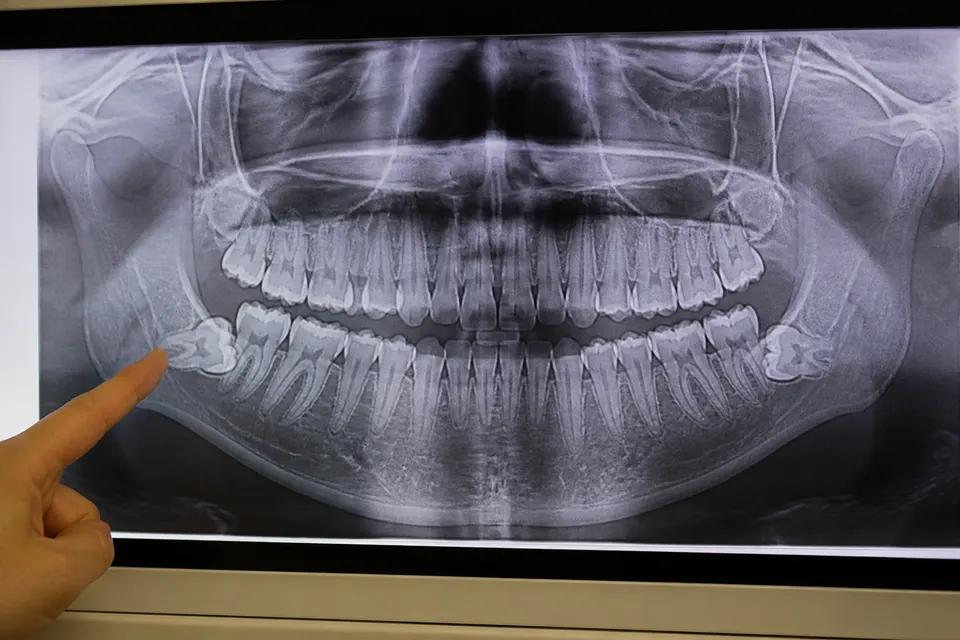
Wisdom teeth are the third molars at the back of the mouth. A tooth is impacted when it cannot erupt into its normal position, often because space is limited or another tooth blocks its path. Impaction describes position, not a diagnosis that automatically requires surgery.
Warning signs need prompt assessment
Severe swelling of the mouth, lips, throat or neck that makes breathing difficult requires emergency medical care. The United Kingdom's National Health Service also identifies heavy bleeding that will not stop and serious injuries to the face or jaw as dental emergencies.
An urgent dental assessment is needed when pain or swelling is severe or worsening, bleeding continues, or pain occurs with a bad taste, fever or feeling unwell. The NHS lists those symptoms as reasons to seek urgent help after wisdom-tooth removal. Before surgery, recurrent gum swelling, pain, food trapping or difficulty opening the mouth also warrants a dental examination rather than a decision based on tooth angle alone.
Disease, not the label "impacted," drives the clearest indications
The United Kingdom's National Health Service says impacted or partly erupted wisdom teeth can cause pain, swelling, pericoronitis, food trapping, decay, gum disease, cysts and dental abscesses. A tooth producing one of these problems may need removal, while a tooth that is not causing problems will usually be monitored at routine dental check-ups.
Pericoronitis is inflammation and infection around a partly erupted tooth. Recurrent gum swelling, pain or difficulty opening the mouth needs an examination to distinguish it from decay, an abscess or another condition. The diagnosis and the condition of neighboring structures matter more than the direction in which the wisdom tooth tilts.
Symptom-free and disease-free teeth remain an evidence gap
A 2020 Cochrane review found insufficient evidence to decide whether asymptomatic, disease-free impacted wisdom teeth should be removed or retained. It included one randomized trial and one prospective cohort study, and the available comparisons were low or very low certainty.
The review found very uncertain observational evidence linking retention to later gum disease around the neighboring second molar. It did not establish a difference in decay risk, and the included studies did not measure many other consequences of removal or retention. Cochrane advised shared decision-making and regular clinical assessment when a tooth is retained.
The NHS says a tooth that is not causing problems will usually be left in place and monitored, while Cochrane found too little reliable comparative evidence to choose routine removal or retention for every disease-free impacted tooth. A recommendation should therefore identify the finding being treated and should not rely only on the broad label of "impacted."
Examination and imaging answer different questions
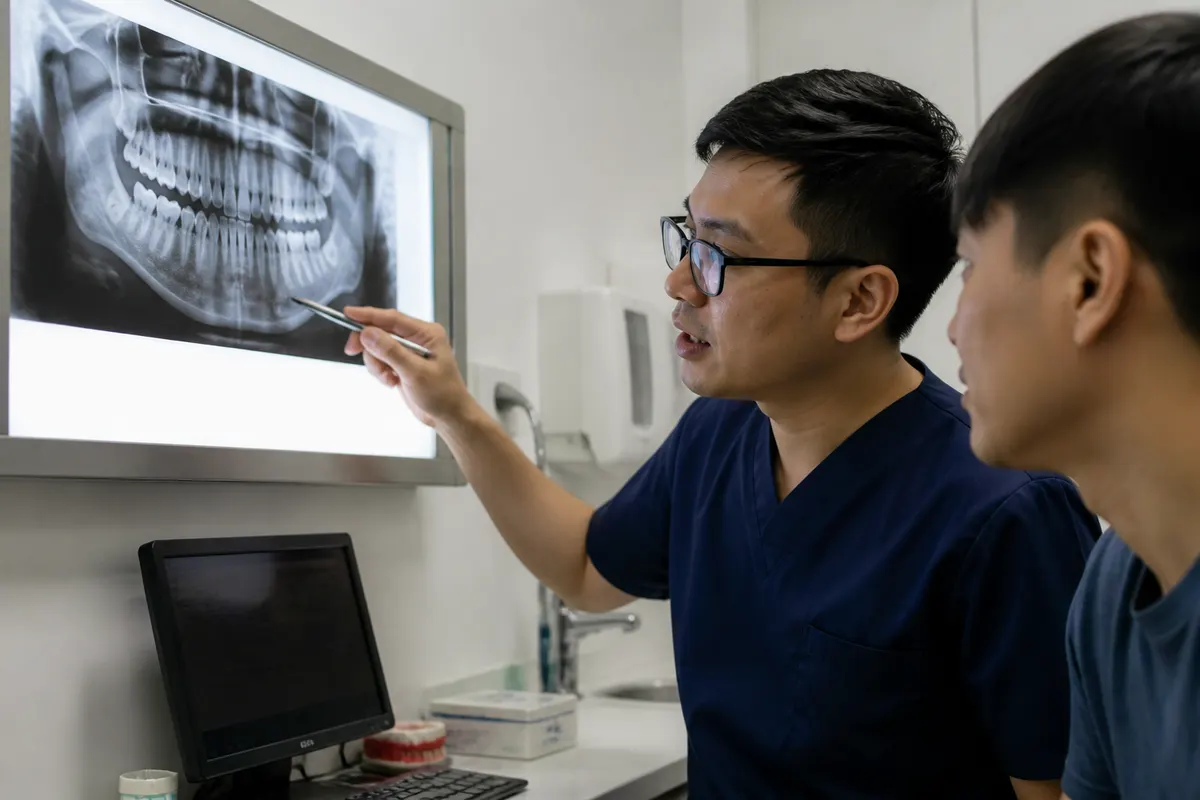
Symptoms alone cannot show whether a neighboring tooth is decaying, a root is resorbing or tissue around the crown has changed. The NHS says a dentist may use X-rays to assess how wisdom teeth are positioned. Imaging complements an examination; it does not by itself decide whether the expected benefit of surgery outweighs the risks.
The assessment should identify whether the tooth is fully erupted, partly erupted or covered by gum or bone; whether it can be cleaned; whether decay or periodontal damage affects it or the second molar; and how close the roots appear to nearby structures. If surgery is proposed, the reason should be a named finding or anticipated treatment need rather than the word "wisdom tooth" alone.
Surgery exchanges future uncertainty for immediate risks
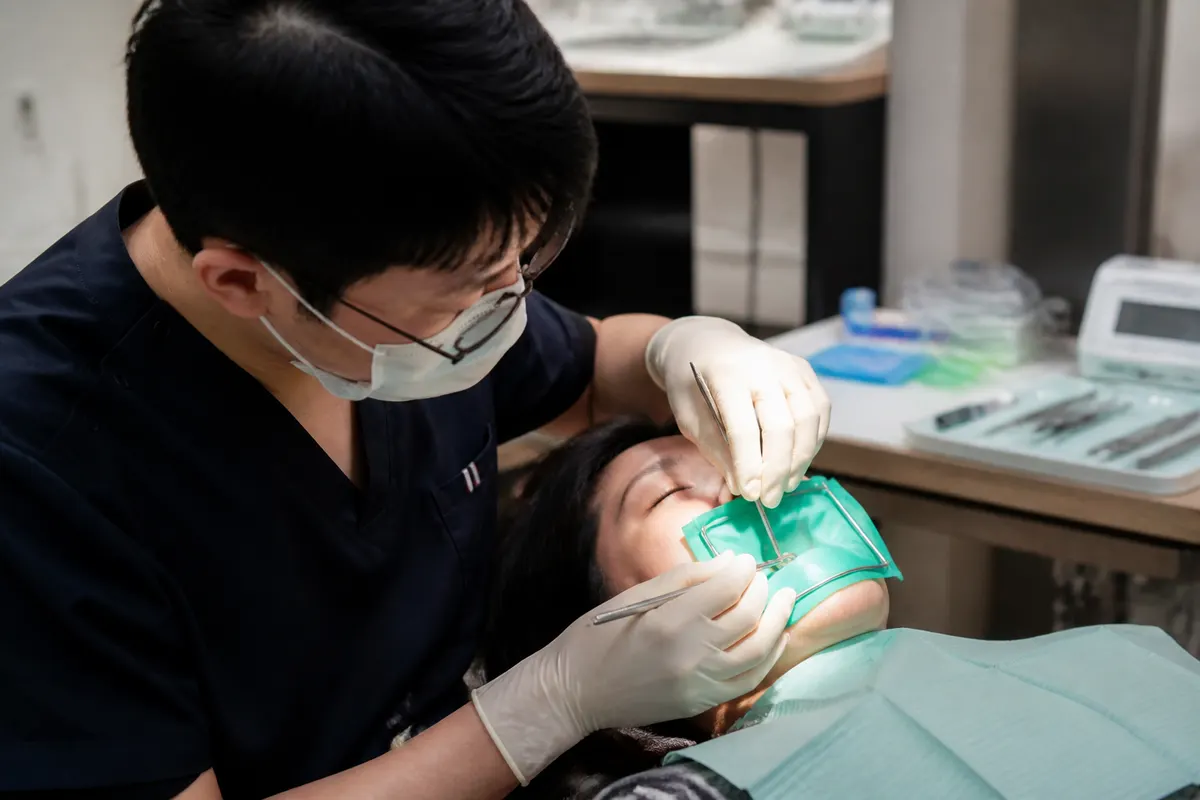
Removal can involve a simple extraction or surgery through gum and bone. The procedure may be performed with local anesthesia, sedation or general anesthesia depending on the case and the health system. Availability, professional roles and payment arrangements differ by country.
The NHS lists dry socket, infection and injury to nearby nerves among possible complications of wisdom-tooth removal. Nerve injury can cause numbness or tingling in the tongue, lip or chin; the NHS says this usually improves but can last for weeks or months. Bleeding, swelling, jaw stiffness and pain can also follow the procedure.
Dry socket occurs when the protective blood clot does not form properly or is displaced before the socket heals. The NHS advises patients not to smoke during recovery because smoking raises infection risk and to follow the wound-care instructions given by the treating team. New or worsening symptoms should be assessed rather than managed from a generic online schedule.
Anatomy changes the surgical discussion
Lower wisdom-tooth roots may lie near the inferior alveolar nerve, and the lingual nerve also can be injured during surgery. Tooth depth, root shape, the apparent relationship to nearby structures and the amount of bone covering the tooth can change the proposed procedure. An imaging finding still needs clinical interpretation before it becomes a treatment choice.
Wisdom teeth are not a settled explanation for crowding
Preventing the front teeth from becoming crowded is often offered as a reason for removal, but the research remains uncertain. A 2026 systematic review found very-low-certainty evidence and no consistent indication that the presence, absence or removal of wisdom teeth meaningfully changes front-tooth alignment after orthodontic treatment.
Earlier reviews and observational studies have reported mixed results, with substantial risk of bias. Removing a disease-free wisdom tooth solely to preserve alignment therefore needs a case-specific orthodontic and surgical rationale. Retention planning remains part of orthodontic care whether wisdom teeth are present or absent.
Some patients need a separate plan
Children and adolescents may still have developing teeth and roots, so adult assumptions about timing and anatomy should not be applied without dental imaging and an age-appropriate assessment. A parent or guardian should receive the explanation of options, anesthesia and follow-up required by the applicable health system.
Pregnant patients should tell the dentist or surgeon about the pregnancy before imaging, anesthesia or medicines are planned. People with chronic conditions, bleeding risks or immune suppression, and anyone taking prescription or over-the-counter medicines or supplements, should provide a current medical and medication history. These groups need advice from the treating dental and medical clinicians rather than a standard plan written for a generally healthy adult.
Questions that make the decision auditable
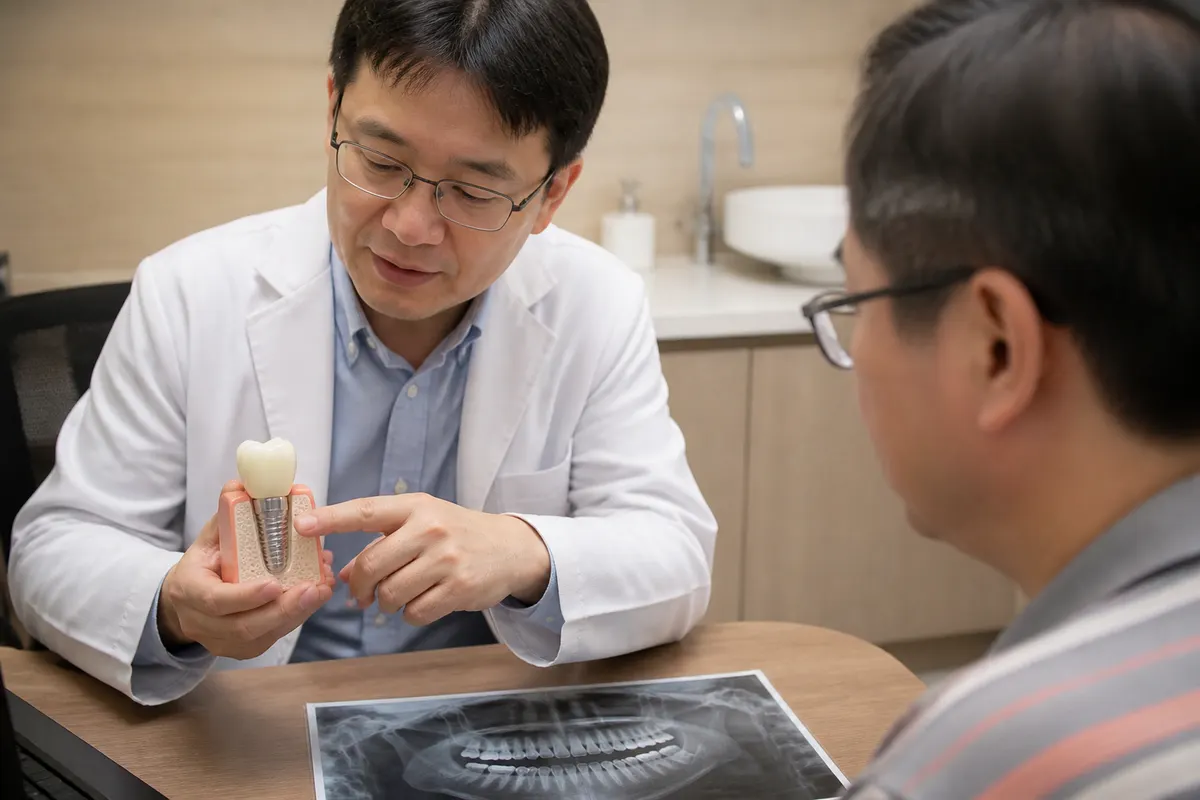
A recommendation for removal should identify the finding being treated, the expected benefit of acting now, the material risks of surgery and the consequences of monitoring instead. If a tooth is retained, the plan should state what will be checked and when, including whether future imaging is expected.
For surgery, the discussion should cover the proposed procedure, anesthesia, proximity to nerves or neighboring teeth, expected recovery and a contact route for urgent problems. Price and insurance coverage need to be checked in the patient's country and plan; figures from another health system are not portable.
Frequently asked questions
Does every impacted wisdom tooth need to be removed?
No. The NHS says teeth that are not causing problems will usually be monitored, and Cochrane found insufficient evidence to determine whether removal or retention is better for disease-free impacted teeth. Examination and imaging findings guide the decision for an individual tooth.
Can a painless wisdom tooth be ignored?
Pain is not the only sign of disease. Decay, periodontal damage, resorption or a cyst may be found during examination or imaging. When a disease-free tooth is retained, Cochrane advises regular clinical assessment rather than waiting only for symptoms.
Does inflamed gum mean the tooth must come out?
Not automatically. A dentist needs to distinguish pericoronitis from decay, an abscess or another cause, then assess severity, recurrence and the condition of nearby teeth. The treatment decision follows that diagnosis.
Will removal prevent front teeth from becoming crowded?
Current review evidence does not provide a reliable general basis for preventive removal to preserve front-tooth alignment. Orthodontic relapse has several possible causes, and a retention plan remains necessary whether wisdom teeth are present or absent.
What should happen if pain worsens after removal?
Severe or increasing pain and swelling, bleeding that will not stop, or pain with a bad taste, fever or feeling unwell needs urgent dental assessment. Breathing difficulty associated with severe mouth, throat or neck swelling requires emergency medical care.
Sources and further reading
- Surgical removal versus retention for asymptomatic disease-free impacted wisdom teeth(Cochrane)
- Wisdom tooth removal(United Kingdom National Health Service)
- How to find an emergency or urgent NHS dentist appointment(United Kingdom National Health Service)
- Wisdom teeth removal and anterior alignment stability after orthodontic treatment: a systematic review(Clinical Oral Investigations)