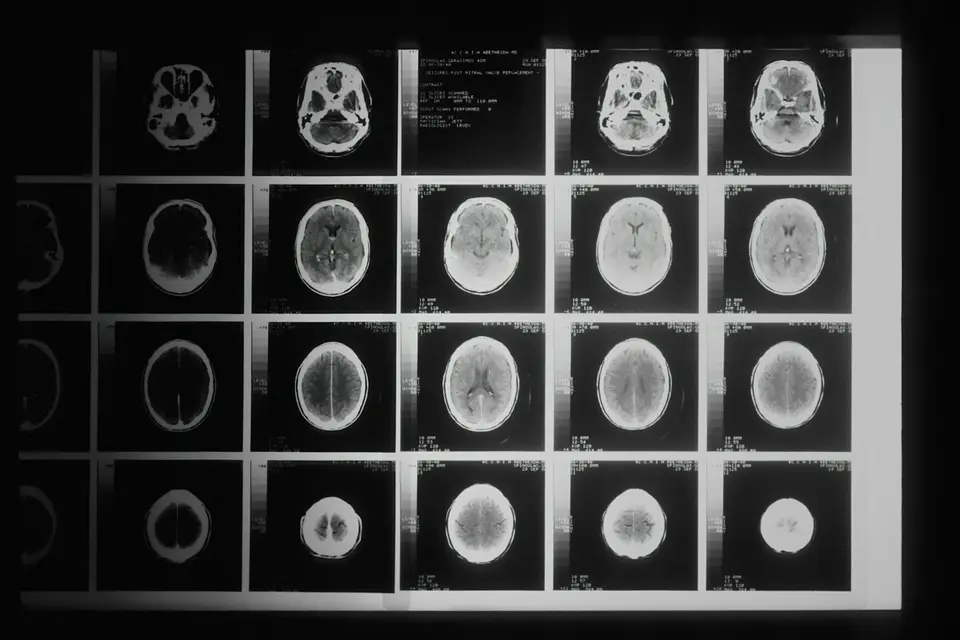
Taiwan's National Health Insurance Administration said in August 2024 that it aimed to finish a cost-effectiveness review of AI diagnostic tools by the end of that year. The agency cited software that could assist clinicians in detecting intracranial bleeding on computed tomography (CT) scans as a possible next candidate for payment, but did not name a product or proposed rate.
APPI News could not find a published payment decision for that CT application as of August 3, 2026. That search gap does not show that the proposal was rejected or that no review took place; it means the publicly available record located for this report does not resolve the 2024 promise.
The proposal concerns Taiwan's national insurance system
Taiwan's National Health Insurance is a single-payer program that pays contracted providers for covered care. A decision to add an AI tool would determine whether the program pays for its use under specified conditions, not whether the software is accurate in every hospital or authorized in another country.
The August 2024 announcement said the agency was considering temporary payment for AI diagnostic tools. It also pointed to an AI-assisted system used for high-risk surgical patients as the program's first paid example, while describing CT support for intracranial bleeding as the next type under evaluation.

The earlier payment case has a narrower purpose
The earlier case involved an Edwards Lifesciences sensor using the company's Hypotension Prediction Index, which analyzes an arterial pressure waveform to warn of possible low blood pressure during surgery. A 2024 report from National Cheng Kung University says Taiwan began paying for the sensor in July 2023 after reviewing six randomized trials and setting its payment at 8,593 points.
That record shows how evidence supported one defined use, patient group and payment. It cannot be carried across to brain imaging, where the model, workflow, clinical consequence of a false result and staff requirements are different.
The blood-pressure evidence also needs a cautious reading. A 2025 systematic review of 11 randomized trials found that Hypotension Prediction Index-guided care reduced the incidence and duration of low blood pressure during non-cardiac surgery, but did not change acute kidney injury or hospital length of stay. A device can therefore improve an intermediate measure without yet showing better patient outcomes or lower overall costs.
A payment review must measure more than model accuracy
Accuracy measured on a test dataset is only one input to a coverage decision. The World Health Organization defines health technology assessment as a multidisciplinary review of clinical, economic, ethical and social effects used to inform adoption and reimbursement. The comparison must address the technology as used in care, not the algorithm in isolation.
For CT triage, relevant outcomes could include how quickly a scan reaches a clinician, whether the alert changes treatment, the number and consequences of false alerts, the staff time required for review and the effect on other imaging work. The review must also count software integration, training, monitoring and updates rather than treating the purchase price as the full cost.
Published economic research offers limited shortcuts. A 2022 scoping review found only 13 cost-effectiveness studies of medical AI among 4,820 screened records, and only five of the 13 stated the assumed payment mechanism. The authors concluded that the available studies did not establish whether the assessed systems were clinically, technically and economically viable.

Taiwan built a new evidence route after the deadline
Taiwan's health ministry described a three-part evaluation structure in March 2025. Its AI Impact Research Center was designed to compare outcomes from clinicians using AI with outcomes from clinicians working without it, so that clinical value could inform a payment. Separate centers address responsible implementation and clinical validation.
The timeline became clearer in November 2025, almost a year after the original target. Taiwan launched AI impact research centers at five medical centers, and health ministry information chief Lee Chien-chang said randomized trials already in progress could take at least three years to produce results. The centers use local data and are intended to support later health technology assessment and payment deliberations.
The new structure does not by itself answer what happened to the CT review announced in 2024. It does show that Taiwan was still building the machinery for local clinical and economic evaluation after the promised deadline had passed.

Clinical adoption remains part of the calculation
An AI alert has value only if it fits the clinical pathway and changes a decision that matters. Hospitals need rules for who reviews an alert, how quickly they respond, what happens when the clinician disagrees and how performance is monitored after deployment.
Those questions affect both benefit and cost. Extra false alerts can consume staff time, while a useful triage signal may move an urgent scan forward in the queue. A defensible payment decision needs evidence on both effects in the hospitals where the tool would be used.

Sources and further reading
- AI diagnostic tools proposed for NHI coverage, benefit assessment due by year-end(Central News Agency)
- Investigation of Taiwan's first NHI payment for AI software(National Cheng Kung University Medical Device Innovation Center)
- Effectiveness of the hypotension prediction index in non-cardiac surgeries(Brazilian Journal of Anesthesiology via PubMed Central)
- Health technology assessment of medical devices, 2nd edition(World Health Organization)
- Evaluation of the clinical, technical, and financial aspects of cost-effectiveness analysis of AI in medicine(JMIR Medical Informatics via PubMed)
- Three problems must be addressed before AI can be implemented in healthcare(Taiwan Ministry of Health and Welfare)
- Taiwan launches AI impact research centers(Central News Agency)