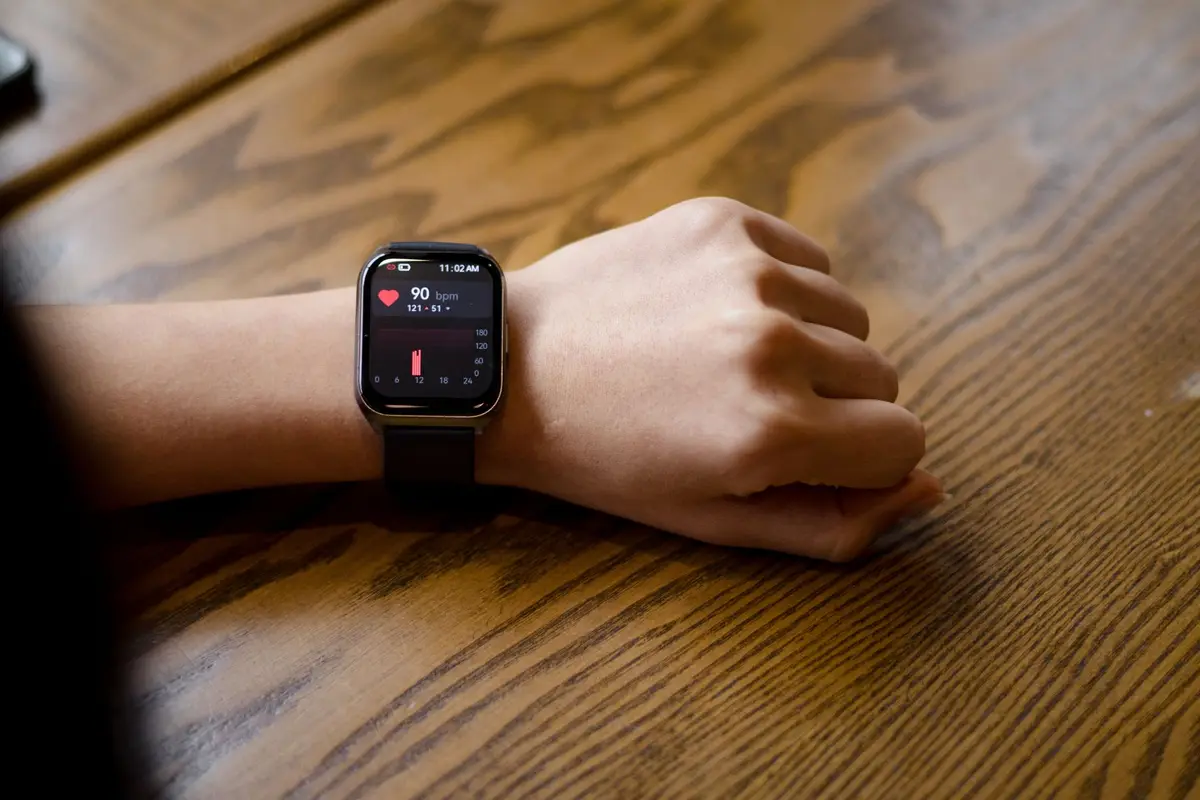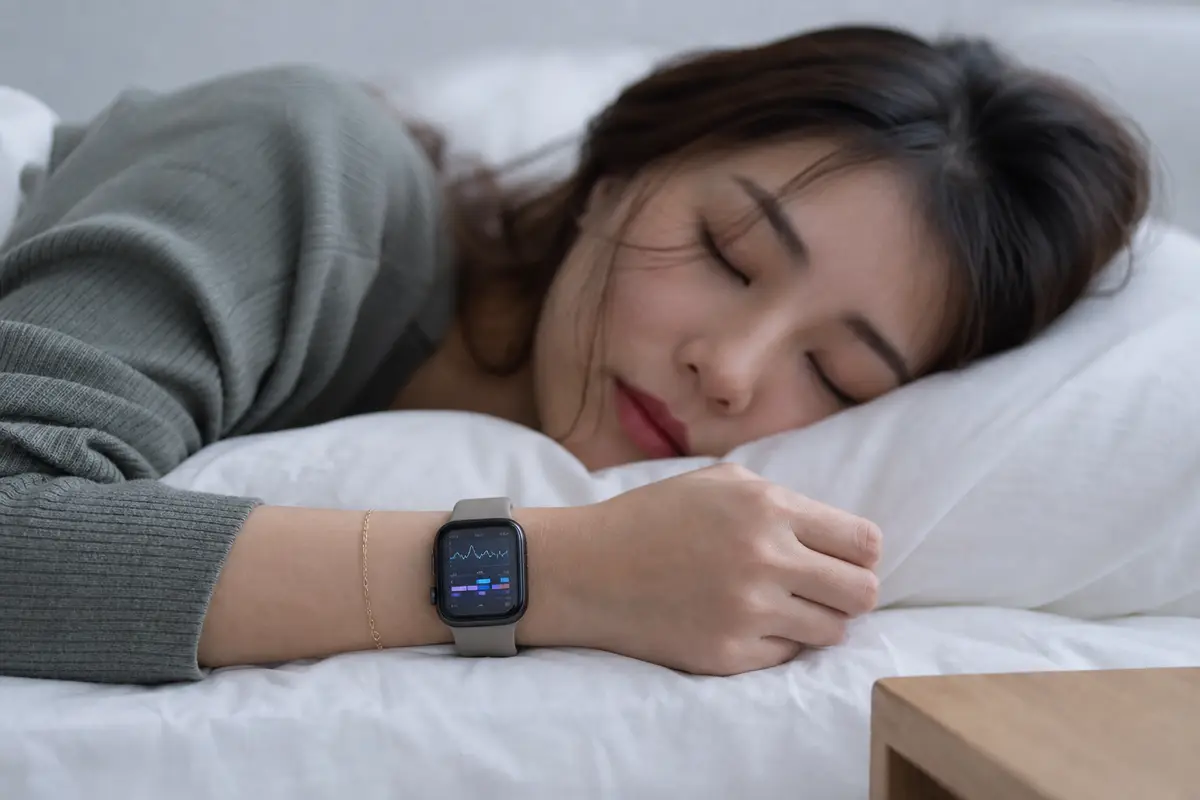
A 2025 laboratory study found that six wrist-worn trackers identified more than 90 percent of sleep intervals but correctly identified only 29.39 percent to 52.15 percent of wake intervals. Their movement and pulse sensors can show broad patterns, but their sleep-stage estimates do not match direct physiological measurements consistently.
The result explains a common mismatch: a watch may recognize that someone spent most of the night asleep while still misclassifying quiet wakefulness or individual stages. A separate meta-analysis of 24 studies also found measurable differences between consumer wrist trackers and polysomnography in total sleep time, sleep efficiency, sleep latency and wakefulness after sleep began.
Wrist sensors infer sleep rather than measure brain activity
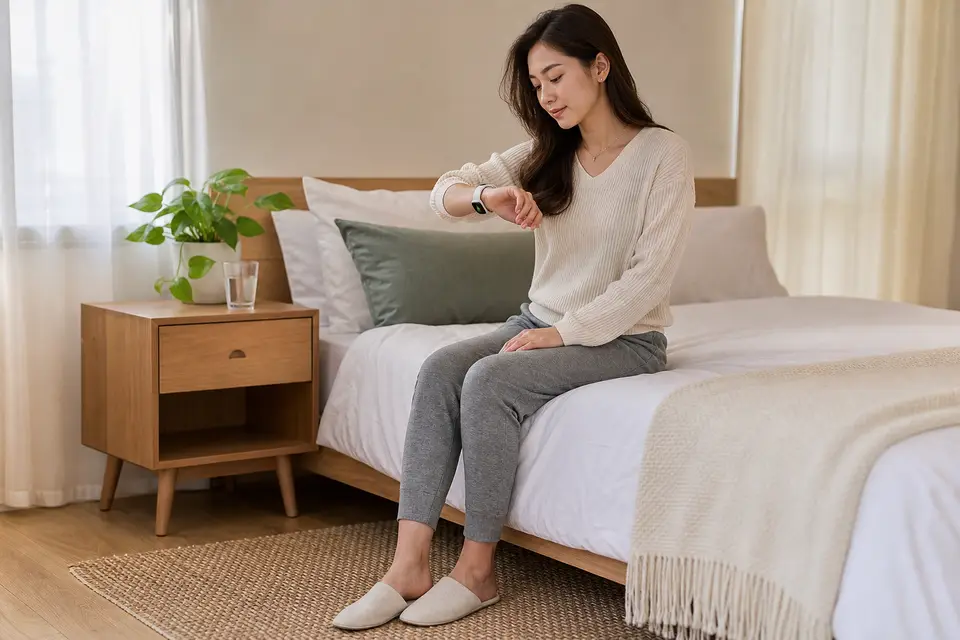
The six-device study describes consumer trackers as combining accelerometer data with photoplethysmography, an optical method used to measure changes in blood flow and derive signals such as heart rate. Each manufacturer applies a proprietary algorithm to those signals and labels intervals as wake, light sleep, deep sleep or rapid eye movement sleep.
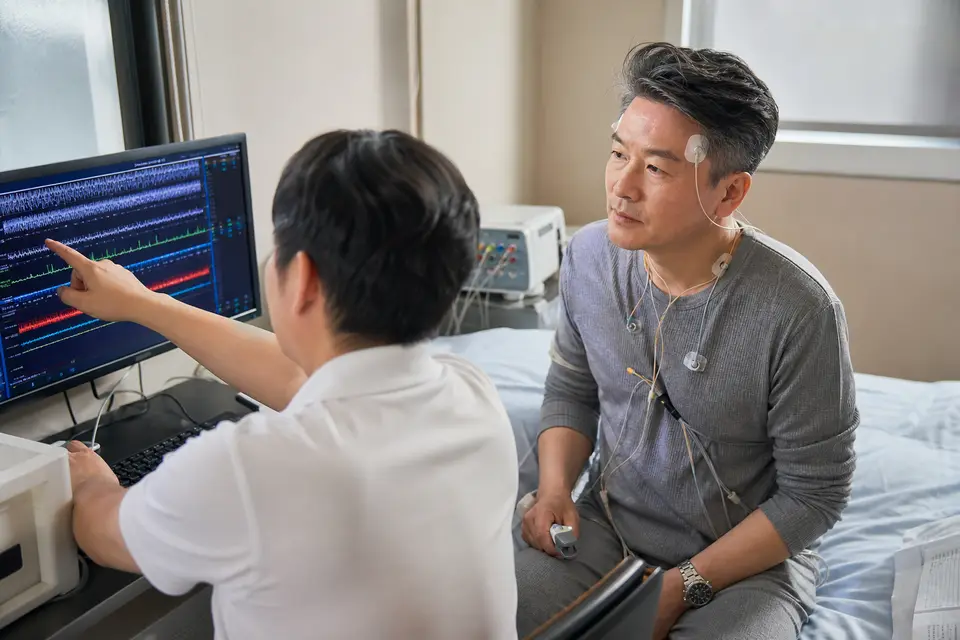
Polysomnography records brain activity, eye movement and muscle tone, with additional signals used to assess breathing and other events. That direct physiological record is the comparison standard used in the study. A wrist tracker does not collect the same set of signals, so agreement must be tested for each metric rather than assumed from a single overall score.
Severe breathing symptoms need emergency assessment
A sleep score or wearable notification should not determine whether severe symptoms are an emergency. The United Kingdom's National Health Service advises immediate emergency care for severe difficulty breathing, an inability to speak because of gasping or choking, a tight or heavy chest, blue or gray lips or skin, or sudden confusion. Local emergency numbers and services differ by country.
All six devices were better at detecting sleep than wake
Researchers at Antwerp University Hospital tested the Fitbit Charge 5, Fitbit Sense, Withings Scanwatch, Garmin Vivosmart 4, Whoop 4.0 and Apple Watch Series 8 against polysomnography in 62 adults. Each participant wore two to four devices during one laboratory night between April 2023 and August 2024.
Sleep sensitivity ranged from 91.68 percent to 96.27 percent, while wake specificity ranged from 29.39 percent to 52.15 percent. High sensitivity means the devices recognized most intervals that polysomnography classified as sleep. Lower specificity means they frequently labeled quiet wakefulness as sleep.
The study also assessed four-state classification with Cohen's kappa, which accounts for agreement that could occur by chance. The results ranged from fair to moderate agreement:
| Device | Cohen's kappa for sleep-state agreement |
|---|---|
| Apple Watch Series 8 | 0.53 |
| Fitbit Sense | 0.42 |
| Fitbit Charge 5 | 0.41 |
| Whoop 4.0 | 0.37 |
| Withings Scanwatch | 0.22 |
| Garmin Vivosmart 4 | 0.21 |
Those rankings are narrower than a general verdict on either brand. Usable data counts ranged from 20 participants for the Apple Watch Series 8 to 41 for the Withings Scanwatch, and every participant was observed for only one night. The study included 52 men and 10 women, limiting how confidently the results can be extended to other populations or long-term use at home.
The pooled evidence also finds measurement gaps
A 2025 meta-analysis combined 24 studies involving 798 participants and found statistically detectable differences between consumer wrist trackers and polysomnography in four measures. On average, the wearable results differed by 16.85 minutes for total sleep time, 4.69 percentage points for sleep efficiency, 2.57 minutes for sleep latency and 13.26 minutes for wake after sleep onset.
The pooled figures do not work as an error correction for an individual device. The analysis combined products from multiple manufacturers and generations, including Jawbone and Basis B1 models that are no longer current. Subgroup results also varied, which means the overall average cannot predict the direction or size of error for one person on one night.
Medical clearance covers a named feature, not every sleep metric
Consumer sleep stages and a regulated medical notification are different functions even when they appear on the same watch. The US Food and Drug Administration cleared Apple's Sleep Apnea Notification Feature in September 2024 for adults aged 18 or older who had not previously received a sleep apnea diagnosis.
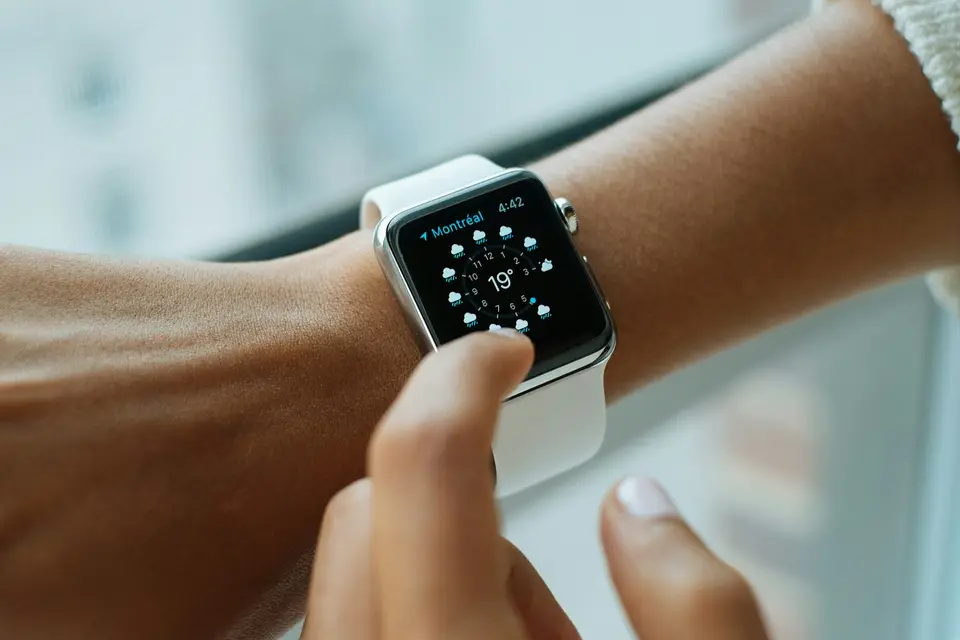
The US regulator says the feature analyzes Apple Watch sensor data for breathing-disturbance patterns associated with moderate to severe sleep apnea, but is not intended to diagnose, treat or help manage the condition. It also says the absence of a notification does not establish that sleep apnea is absent. That clearance does not validate ordinary sleep scores or sleep-stage labels, and regulatory status and availability vary by country.
Clinical use requires context beyond the dashboard
The American Academy of Sleep Medicine says consumer sleep technology should not be used to diagnose or treat sleep disorders, though the data may support a patient-clinician discussion when considered as part of an appropriate clinical evaluation. The position statement predates the US clearance of Apple's specific apnea-notification feature, but its distinction between consumer data and clinical diagnosis remains consistent with the clearance limits stated by the US regulator.
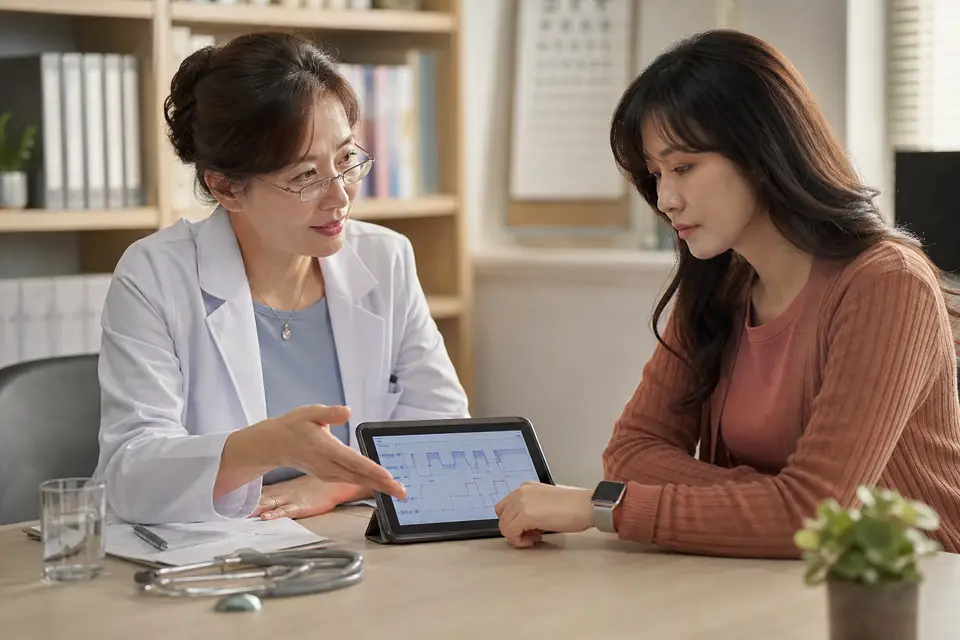
The published studies do not establish separate interpretation rules for children, pregnant people, people with chronic conditions or those taking medication. People in these groups should discuss wearable findings with a clinician before using them to change medical care. The same applies when an ongoing sleep problem, excessive daytime sleepiness or fatigue conflicts with a reassuring device score.
What the evidence supports
The evidence supports using wrist trackers to observe broad sleep patterns while recognizing that wake detection and sleep staging are less dependable. It does not support treating a nightly stage breakdown as equivalent to polysomnography or comparing two brands from a single score without model-specific validation.
The American Academy of Sleep Medicine says performance can vary between models from the same manufacturer and that software updates may alter accuracy. A study tied to the Apple Watch Series 8 or Garmin Vivosmart 4 therefore describes the tested model and software period, not every later device carrying the same brand.
Sources and further reading
- A performance validation of six commercial wrist-worn wearable sleep-tracking devices for sleep stage scoring compared to polysomnography(Sleep Advances)Single-night laboratory comparison of six devices in 62 adults, including sleep sensitivity, wake specificity and Cohen's kappa results.
- Performance of consumer wrist-worn sleep tracking devices compared to polysomnography: a meta-analysis(PubMed)Meta-analysis of 24 studies involving 798 participants and four sleep measures.
- Consumer Sleep Technology: An American Academy of Sleep Medicine Position Statement(American Academy of Sleep Medicine)Professional position statement on the clinical limits of consumer sleep technology.
- FDA Roundup: September 17, 2024(US Food and Drug Administration)US clearance scope and intended population for Apple's Sleep Apnea Notification Feature.
- Staying current with actigraphy devices for sleep-wake monitoring(American Academy of Sleep Medicine)Professional overview explaining why device model and software version matter when assessing validation evidence.