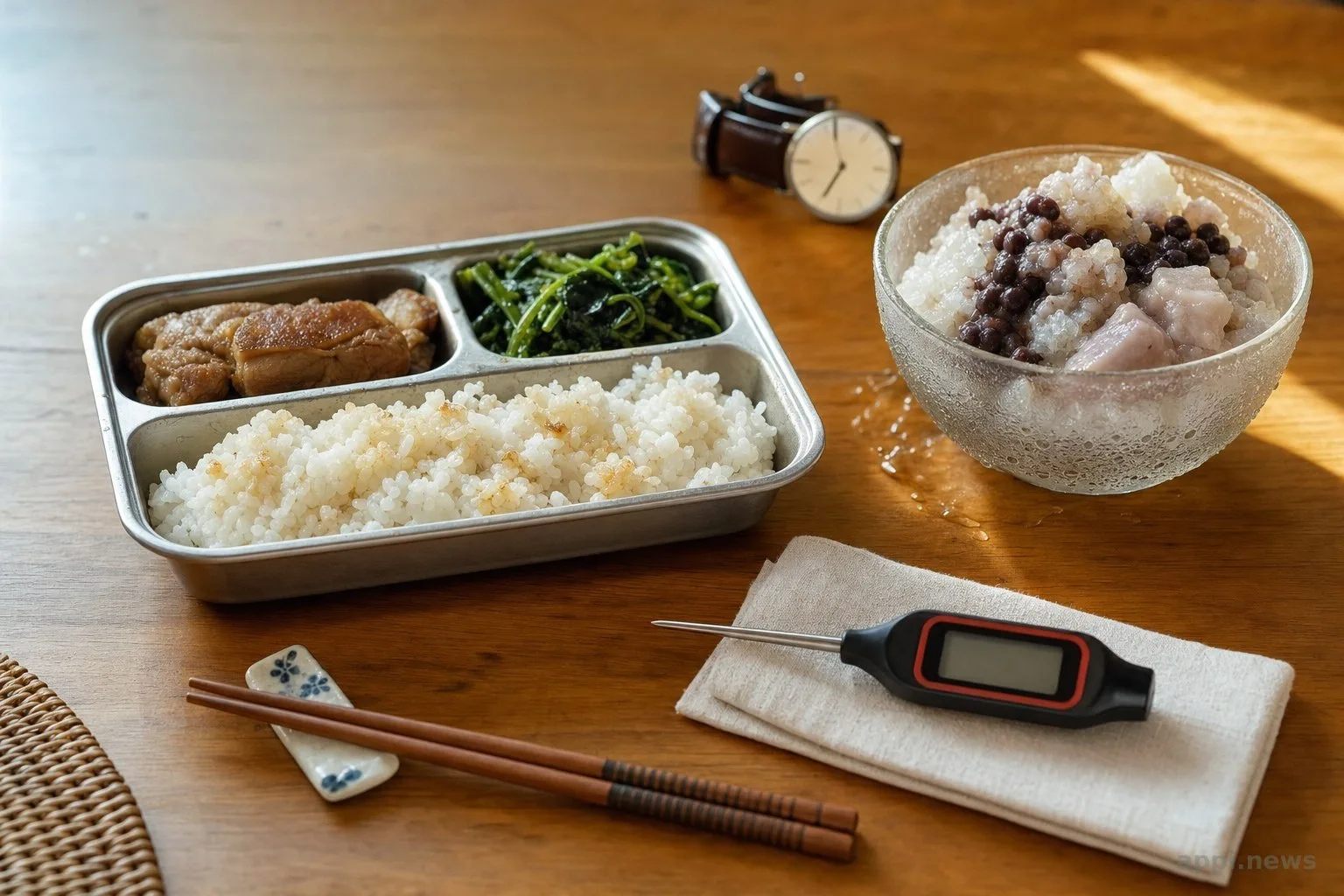
A 2015 analysis of more than 1,000 mostly raw foods placed pork fat eighth with a nutritional score of 73. The result describes a mathematical pattern in nutrient data, not how much lard people should eat or whether it lowers disease risk.
The distinction matters because a ranking can look like a recommendation when it is repeated without the study design. These five checks for health claims start with the same question: what did the source actually measure?
When food-related symptoms need urgent care
Difficulty breathing, swelling of the lips, mouth, tongue or throat, fainting, or rapidly worsening symptoms after eating require emergency help. The United Kingdom's National Health Service describes these as warning signs of anaphylaxis. A nutrition ranking cannot assess an allergic reaction or decide whether a symptom is safe to manage at home.
Children, pregnant or breastfeeding people, older adults with frailty, people with diabetes or kidney disease, and anyone taking medicines that affect cholesterol or blood pressure may need advice matched to their circumstances. They should not use a general fat target as an individualized treatment plan.
What the ranking actually measured
The PLOS ONE study started with 1,068 foods from the United States Department of Agriculture nutrient database and unified nutritionally redundant entries into a network of 654 foods. The sample focused on raw foods and foods whose nutrient content had been minimally changed, including some frozen and dried products.
The researchers created a measure called nutritional fitness. It counted how often a food appeared in combinations that could meet lower limits for some nutrients without exceeding upper limits for others. The calculation used nutrient amounts per 100 grams and dietary reference values from the US National Academies.
That is a model of nutrient composition. It is not a clinical trial, a population study or a meal plan. The paper says that extending the analysis to cooked foods would require further work, and it does not test whether people who eat more pork fat have better or worse long-term health.
Why pork fat appeared near the top
BBC Future reproduced the list with pork fat at number eight, a score of 73 and 632 kilocalories per 100 grams. The same page placed Swiss chard seventh and beet greens ninth. Those neighboring positions show how the list orders nutrient combinations; they do not make pork fat interchangeable with vegetables.
The BBC page also described pork fat as a source of B vitamins and minerals and as more unsaturated than lamb or beef fat. That comparison does not remove the need to check total energy, saturated fat and portion size. A food can contain useful nutrients and still be a concentrated source of calories.
The study did not include taste, price, season, farming method or cultural food practices in the score. It also did not translate the result into a serving size. “Eighth” therefore answers a narrow database question: how well the listed nutrient profile appeared to fit the study's mathematical requirements.
How the score differs from dietary guidance
The World Health Organization says saturated fat should provide no more than 10 percent of total energy and that unsaturated fats are preferable to saturated and trans fats. It also places fat advice within a varied diet containing vegetables, fruit, pulses and whole grains. This is population guidance, not a calculation of the correct amount of lard for one person.
WHO's 2023 update recommends replacing saturated fatty acids with polyunsaturated fats, or with monounsaturated fats from plant sources. The replacement matters: adding a different food without reducing the original source does not automatically improve the overall diet.
Pork fat is therefore best assessed as one ingredient in a whole day's intake. The relevant comparison is not “lard or no nutrients,” but lard alongside the other fats, fatty meats, dairy foods, fried foods and packaged products a person eats. Product labels can be more useful than a general ranking when the question is how much saturated fat is in a specific serving.
How this plays out outside Taiwan
The practical answer depends on where a reader shops and which public guidance applies. The ranking itself is not a food law, a clinical standard or a label claim in the United Kingdom, the United States or Singapore. In all three markets, a reader can treat pork fat as a high-energy cooking fat and compare its saturated-fat amount with the rest of the meal. The label on the actual product takes priority over a media list because rendered fat can differ by product and serving size.
For readers in the United Kingdom, the National Health Service gives a population guide of no more than 30 grams of saturated fat a day for an average man and 20 grams for an average woman. The page lists lard among saturated-fat sources and advises comparing the saturates line on food labels. It also uses a practical threshold for packaged foods: more than 5 grams of saturated fat per 100 grams is classed as high on its traffic-light explanation. That threshold is a label-reading aid, not proof that one portion is unsafe. A jar of lard may be used in a recipe serving several people, so the amount in the pan must be divided across the portions and added to other saturated-fat sources eaten that day.
For readers in the United States, the US Food and Drug Administration requires saturated fat to appear on the Nutrition Facts label in the situations covered by its labeling rules. The label's serving size is the first checkpoint. It is not necessarily the amount a person serves, and a recipe can contain several labeled servings. Readers can multiply the saturated-fat grams by the number of servings used, then divide by the number of portions if the fat is spread through a dish. That arithmetic gives a more relevant estimate than using the study's 632 kilocalories per 100 grams as though it described every product or every spoonful.
In Singapore, the Health Promotion Board identifies lard and other animal fats as sources of saturated fat and tells shoppers to compare the Nutrition Information Panel. Its guidance favors replacing saturated and trans fats with mono- or polyunsaturated fats and points consumers to the Healthier Choice Symbol for products that meet the relevant criteria within their category. The symbol is not a guarantee that a product is low in calories, nor does it turn a cooking fat into a health treatment. Singapore readers should also distinguish food labels from the country's Nutri-Grade system, which is primarily a beverage labeling scheme and does not provide a pork-fat ranking.
Across these markets, a sensible check is to record the product's serving size, saturated-fat grams and total energy, then look at the whole meal and the rest of the day. People managing high cholesterol, cardiovascular disease, diabetes or kidney disease should use the dietary advice of their clinician or local health authority rather than infer a personal target from an international media ranking. APPI News could not verify a single serving recommendation for pork fat that applies across markets.
What to do with the number in everyday cooking
Use the score as a prompt to inspect the method, not as permission to increase the amount. Measure the fat used in a dish, count the portions, and check whether other ingredients already supply saturated fat. Replacing some saturated fat with an unsaturated oil can change the nutrient balance, but the choice still depends on the dish, the product label and the person's dietary needs.
Repeated high-heat use also changes the food context, even though the PLOS ONE model did not test household cooking methods. A ranking based on raw or minimally modified foods cannot answer questions about frying time, smoke, reused oil or the composition of a finished meal.
Frequently asked questions
Does eighth place mean pork fat is healthier than vegetables?
No. The ranking compares nutritional fitness within a mathematical model. It does not measure the full health value of a diet, cooking method, portion or long-term disease outcome.
How much pork fat should someone eat?
The study does not provide a personal amount. Check the product label, count the portion used and compare the day's total saturated fat with guidance from the relevant national health authority.
Is pork fat always worse than vegetable oil?
The answer depends on the fatty-acid profile, serving and replacement. WHO guidance generally favors unsaturated fats over saturated fats, but a label and the whole dietary pattern are more informative than the word “natural” or a ranking position.
Sources and further reading
- Uncovering the Nutritional Landscape of Food(PLOS ONE)
- The world's most nutritious foods(BBC Future)
- Healthy diet(World Health Organization)
- WHO updates guidelines on fats and carbohydrates(World Health Organization)
- How to eat less saturated fat(United Kingdom National Health Service)
- Nutrition labeling summary sheets(US Food and Drug Administration)
- Unlocking the truth about fats(Singapore Health Promotion Board)