Australia's Fair Work Commission found on August 3 that Heston MRO had unfairly dismissed licensed aircraft maintenance engineer Mohammad Israfel Khan and awarded him more than A$40,000, about US$28,000 at the Reserve Bank of Australia's August 7 exchange rate. Commissioner Chris Simpson found the dismissal harsh and disproportionate after a dispute over Khan's handling of fault messages on a Singapore Airlines aircraft.
The commission did not order Heston MRO to give Khan his job back. It found that his failure to disclose casual work for Virgin Australia had damaged trust between the parties, making compensation more appropriate than reinstatement.
A 17-minute delay led to two different internal findings
Khan had more than 25 years of aviation maintenance experience and joined Heston MRO in May 2023. Heston describes itself as an independent aircraft maintenance provider serving international airlines across Australasia.
In November 2024, several fault messages appeared before a Singapore Airlines aircraft departed Brisbane. With the pilots' agreement, Khan powered down and restarted the aircraft to clear the messages. The aircraft subsequently departed, with the maintenance work contributing to a 17-minute delay.
Heston's first investigation concluded that the reset was an accepted response and did not recommend disciplinary action. Singapore Airlines challenged that outcome, saying the shutdown was unnecessary for the faults involved and that Khan had relied on experience rather than the applicable procedure. A second investigation, led by a newly appointed quality and safety manager, characterized his conduct as a reckless breach of procedure.
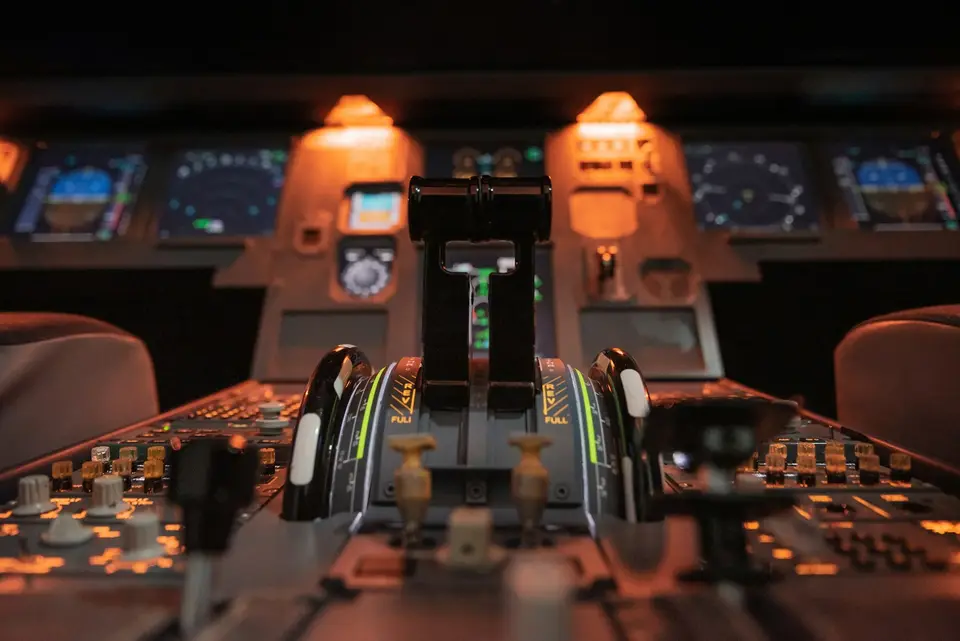
Flight instruments inside a passenger aircraft cockpit (illustrative image). Photo by Moritz Mentges on Unsplash.
The commission found the dismissal process unfair
Heston dismissed Khan in December 2025 after the second investigation. The commission found that he had not been told the specific reason for dismissal before the decision was made and had not received the adverse second report in time to answer it.
The commission accepted that the original investigation did not support discipline or dismissal and found no evidence that Khan intended to delay the flight or disregard safety. It also considered the absence of prior warnings, the short delay and the availability of responses less severe than dismissal.
The ruling did not decide that aviation employers must accept every engineer's judgment about an aircraft reset. It assessed whether Heston had a valid basis for dismissal and whether Khan received a fair opportunity to respond under Australia's Fair Work Act 2009.
Compensation and reinstatement required separate decisions
Khan's undisclosed casual shifts for Virgin Australia did not turn Heston's earlier dismissal process into a fair one. They did, however, affect the remedy. Simpson concluded that the outside work had damaged the trust needed for Khan to return to Heston, so the commission ordered compensation instead.
The award of more than A$40,000 is roughly US$28,000 using the Reserve Bank of Australia's August 7 rate of US$0.7029 per Australian dollar. The conversion is included for international readers and is not the amount specified by the Australian tribunal.
Heston was reported as saying it intended to challenge the decision. APPI News could not verify a filed appeal on the commission's published record as of August 9, 2026, so the status of any further proceeding remains unclear.
Frequently asked questions
Who employed the engineer?
Khan worked for Heston MRO, an aircraft maintenance contractor. Singapore Airlines was Heston's customer, not Khan's employer.
Why was the aircraft restarted?
Fault messages appeared before departure in November 2024. Khan powered down and restarted the aircraft with the pilots' agreement, clearing the messages and contributing to a 17-minute delay.
Why did the two investigations differ?
Heston's first investigation did not recommend discipline. After Singapore Airlines challenged that result, a second review concluded that Khan had recklessly breached procedure.
Why did the commission refuse reinstatement?
Khan had not disclosed casual work for Virgin Australia. The commission found that this had damaged the trust required to resume the employment relationship, even though Heston's dismissal process was unfair.
Sources and further reading
- Khan v Heston MRO Pty Ltd — [2026] FWC 2008(Fair Work Commission)
- About Heston MRO(Heston MRO)
- Exchange rates(Reserve Bank of Australia)