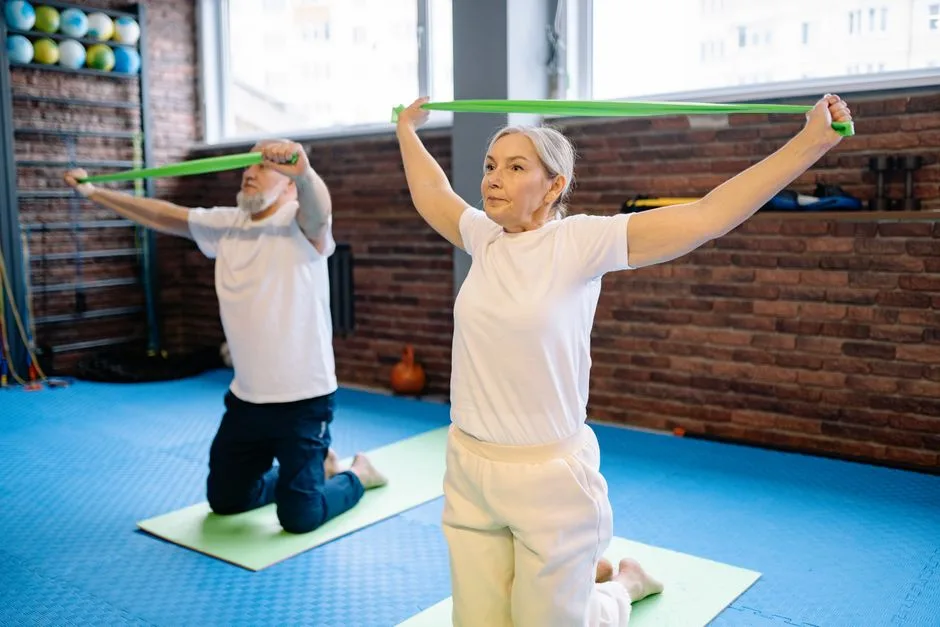
A systematic review of 25 randomized trials found that resistance training improved strength and physical performance in older adults with frailty or sarcopenia. The trials varied widely, and their results do not provide a single exercise prescription for every older person.
The review is stronger evidence than an uncontrolled community success story, but it still has boundaries. Frailty and sarcopenia overlap without being interchangeable, and the studies used several definitions for their early and established stages.
Warning signs during exercise require prompt action
The American Heart Association advises stopping activity and contacting a health professional immediately for chest pressure or tightness, dizziness, confusion, unusual or extreme shortness of breath, or a fast or uneven heartbeat. Chest discomfort that lasts more than a few minutes, especially with nausea or sweating, warrants emergency help through local services.
Older adults with cardiovascular disease, recent surgery, pain that restricts movement, poor balance, or medicines that affect alertness or blood pressure need an individualized plan from a clinician or qualified rehabilitation professional. A new fall, fainting episode or rapid decline in walking ability also calls for assessment before unsupervised resistance work.
Twenty-five trials found gains in strength and mobility
The 2021 systematic review included 25 randomized studies with 2,267 participants and found improvements in handgrip, lower-limb strength, agility, walking speed, postural stability and functional performance. The authors also reported gains among participants classified as having pre-frailty or pre-sarcopenia.
The programs ran for 10 to 48 weeks, averaging about 23 weeks. Training occurred two or three times a week in 21 studies, but that pattern describes the research rather than a dose that has been shown safe and effective for every older adult.
The review's pooled estimates generally favored resistance training, with the largest reported effect among the strength outcomes in the lower limbs. Muscle-mass changes were smaller than improvements in several strength and performance measures, showing why progress cannot be judged from body composition alone.
The evidence does not support a universal routine
Most analyses showed moderate to high variation among study results. Programs differed in load, exercise selection, supervision, duration and the tests used to measure progress. The review also excluded people with several major comorbidities, including diabetes, cancer, stroke, dementia and depression.
Those exclusions narrow how far the averages can be applied. An older adult who walks independently, a care-home resident who needs assistance to stand and a person recovering from surgery do not begin from the same risk level or require the same program.
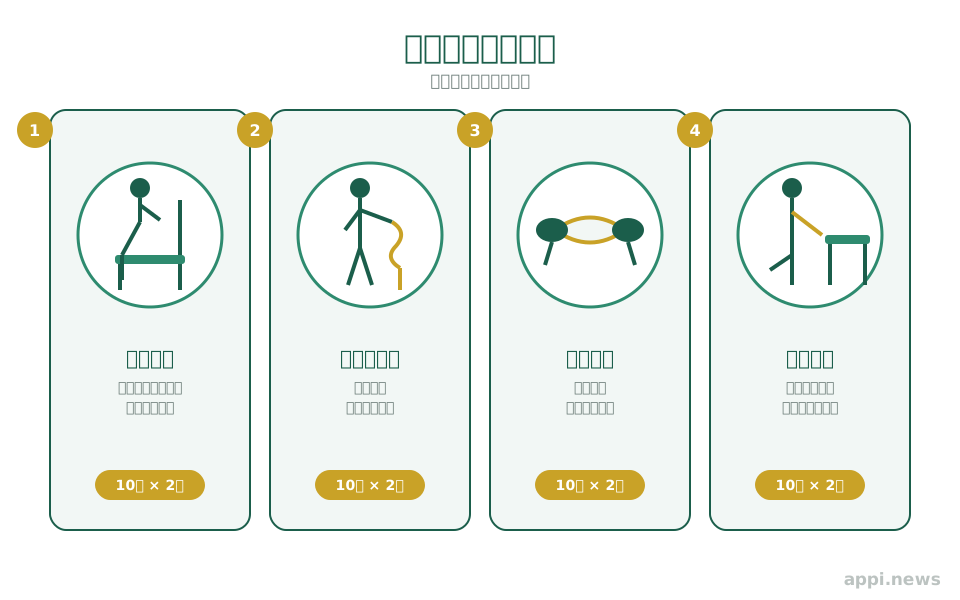
Chair rises, resistance bands and supported balance tasks are examples of movements that a professional may select. The diagram does not establish the appropriate resistance, repetitions, frequency or level of supervision for an individual.
WHO guidance pairs strength with balance and assessment
World Health Organization guidelines advise older adults to include muscle-strengthening activity on at least two days a week and multicomponent activity emphasizing balance and strength on at least three days a week. The guidelines also say that people should start with small amounts and increase frequency, intensity and duration over time.
These are population-level targets, not a rehabilitation prescription. The WHO says older adults living with chronic conditions or disability should work within their abilities, and some people may need advice on precautions before attempting the recommended level.
The WHO's second Integrated Care for Older People handbook connects declining mobility with person-centered assessment, a personalized care plan and follow-up adapted to local services. That pathway places exercise inside a broader review rather than presenting a screening label or exercise sheet as a complete intervention.
Long-term prevention remains uncertain
The trials show that measured strength and function can improve during supervised research programs. They do not establish that the same programs prevent future disability, hospitalization or long-term care, and the review called for longer studies to test whether training changes the prevalence of frailty or sarcopenia.
The source report also described results from a residential-care program in Taiwan. APPI News could not match those outcomes to a published study or controlled dataset, so this article does not use them to estimate effectiveness.
Sources and further reading
- Benefits of Resistance Training in Early and Late Stages of Frailty and Sarcopenia: A Systematic Review and Meta-Analysis of Randomized Controlled Studies(Journal of Clinical Medicine via PubMed)
- WHO guidelines on physical activity and sedentary behaviour(World Health Organization)
- Integrated care for older people: guidance for person-centred assessment and pathways in primary care, second edition(World Health Organization)
- Develop a Physical Activity Plan for You(American Heart Association)